
How enabling waste pickers to participate in School Development and Monitoring Committees (SDMCs) is strengthening their ability to influence decisions that shape their children's education.
By Dr Neelima M, Project Head; Darshana S, Communication Executive; and Revathi Krishnan, Head – Donor Communication, Sparsha Trust
Across Karnataka, School Development and Monitoring Committees (SDMCs) are among the most important spaces for community participation in public education. Created under the Right to Education framework, they offer parents and community members an opportunity to shape decisions that affect children's learning, wellbeing and school development.
In practice, however, many SDMCs struggle to realise this potential. Meetings may be irregular, participation limited and decision-making concentrated among a few individuals.
Yet when communities move from being consulted to actively shaping decisions, SDMCs can become powerful vehicles for accountability, ownership and change.
This is the story emerging from several government schools supported by Sparsha Trust under the Saamuhika Shakti initiative in Bengaluru, where waste-picking communities are moving from the margins of school governance to the centre of decision-making.
Understanding SDMCs
School Development and Monitoring Committees bring together parents, teachers and community representatives to support school development, monitor enrolment and attendance, oversee the use of grants and strengthen accountability within government schools. At their best, they create a platform for communities to participate meaningfully in decisions affecting children's education.
For many waste-picking families, participation in formal systems has often been shaped by exclusion. Parents deeply value education and aspire to better futures for their children, yet opportunities to influence decisions affecting schools and learning have historically remained limited.
Livelihood insecurity, long and unpredictable working hours, social stigma and limited engagement with formal institutions can all create barriers to participation in school governance. In some cases, families may also face challenges related to documentation, migration or access to information about their rights and entitlements. As a result, their perspectives are often absent from decisions that directly affect their children's educational experiences.
Recognising this gap, Sparsha Trust worked with schools and communities to strengthen the functioning of SDMCs and create pathways for meaningful participation. Through sustained engagement, mentorship and regular interactions, community members were supported to understand their rights, responsibilities and potential role within school governance.
A significant milestone was the inclusion of 44 members from waste-picking families across SDMCs in 34 government schools in June 2025. The change was not immediate. Building confidence among community members who had rarely been invited into formal decision-making spaces required time, trust and persistence. However, as participation increased, so too did ownership.
What began as attendance at meetings gradually evolved into leadership. Parents started raising concerns, tracking school issues, monitoring children's attendance and advocating for improvements. They were no longer engaging with schools only as parents concerned about their children's education. They became active participants in school governance—raising issues, shaping decisions and holding systems accountable for better outcomes.
Since 2024, SDMC members across schools supported by Sparsha Trust under the Saamuhika Shakti initiative as part of the Phase 2, have shown that participation matters most when it translates into ownership. As community members stepped into decision-making roles, they began addressing everyday challenges, strengthening accountability and shaping outcomes that improved children's experiences of school.
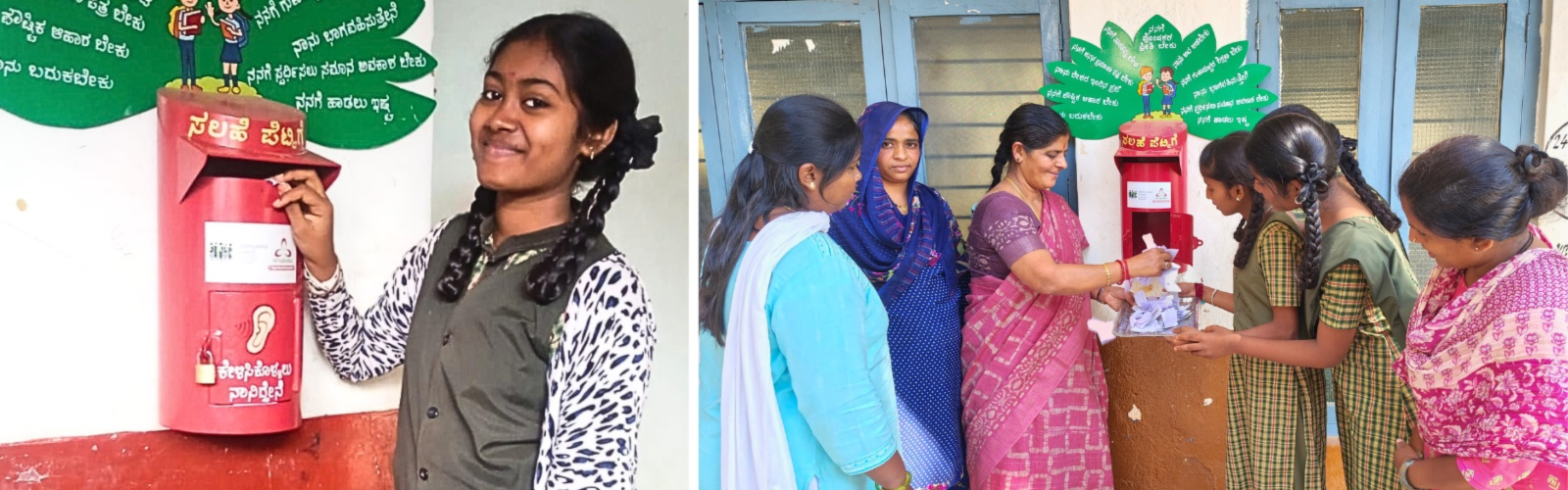
At Government Kannada Higher Primary School (GKHPS), SR Nagar, concerns about damaged toilet facilities surfaced through the school's suggestion box.
Rather than treating the issue as a routine complaint, teachers and SDMC members collectively discussed possible solutions. Recognising that safe sanitation facilities were critical to children's dignity, health and attendance, they approached an external donor for support. The resulting repairs restored the facilities and improved the school environment for all students.
The significance of this story lies not merely in the repaired infrastructure, but in the process itself. Children's voices were heard, community representatives responded and collective action followed.
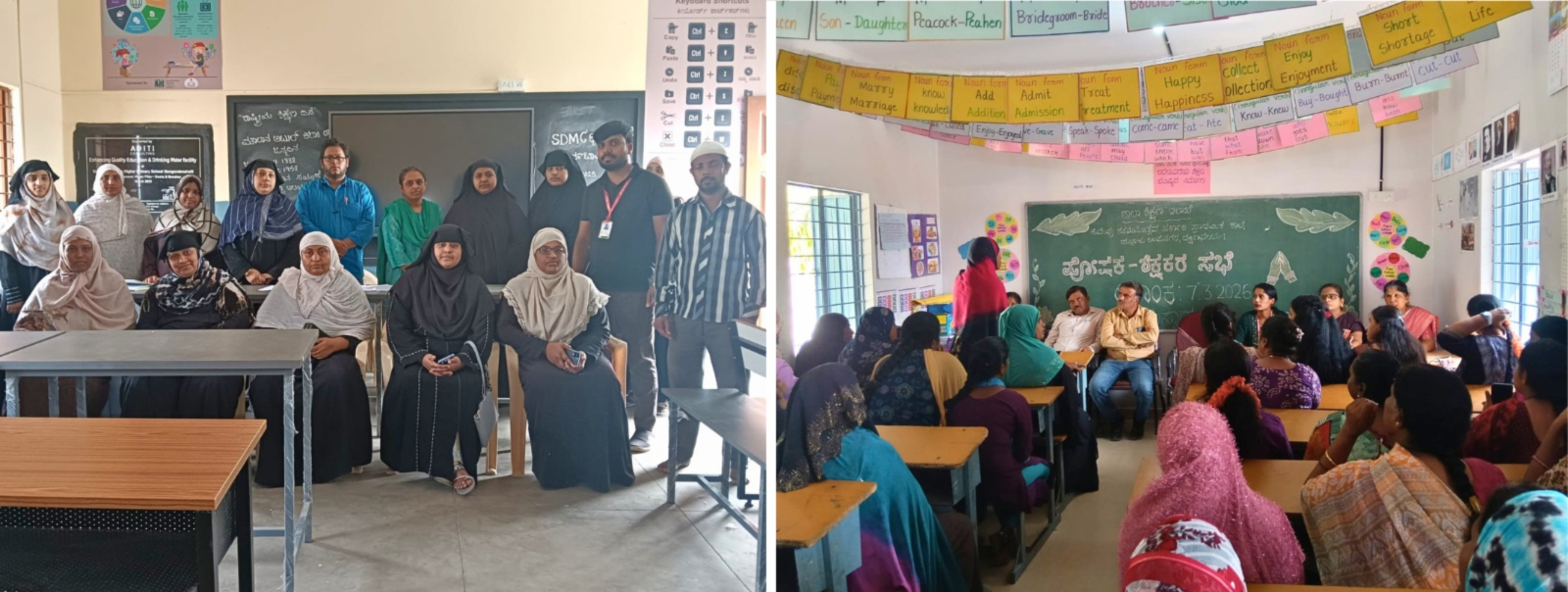
At Government Urdu Lower Primary School (GULPS), Medi Agrahara, the inclusion of five members from waste-picking families brought renewed energy and ownership to the SDMC.
Monthly meetings became regular practice rather than an administrative requirement. Discussions expanded beyond routine matters to include attendance, school development priorities, use of digital learning resources and concerns emerging from students
The shift reflected a broader transformation: governance became more inclusive and accountability became a shared responsibility among teachers, parents and community members.
At Government Urdu Higher Primary School (GUEHPS), Gangondanahalli, regular SDMC meetings created a platform for collective problem-solving.
Six members from waste-picking families emerged as champions for education within their neighbourhoods. Through outreach and follow-up with families, they helped bring children back into the education system while strengthening awareness around the importance of continued schooling.
Their work illustrates an important truth: communities are often best placed to identify barriers to education because they live alongside the children affected by them.
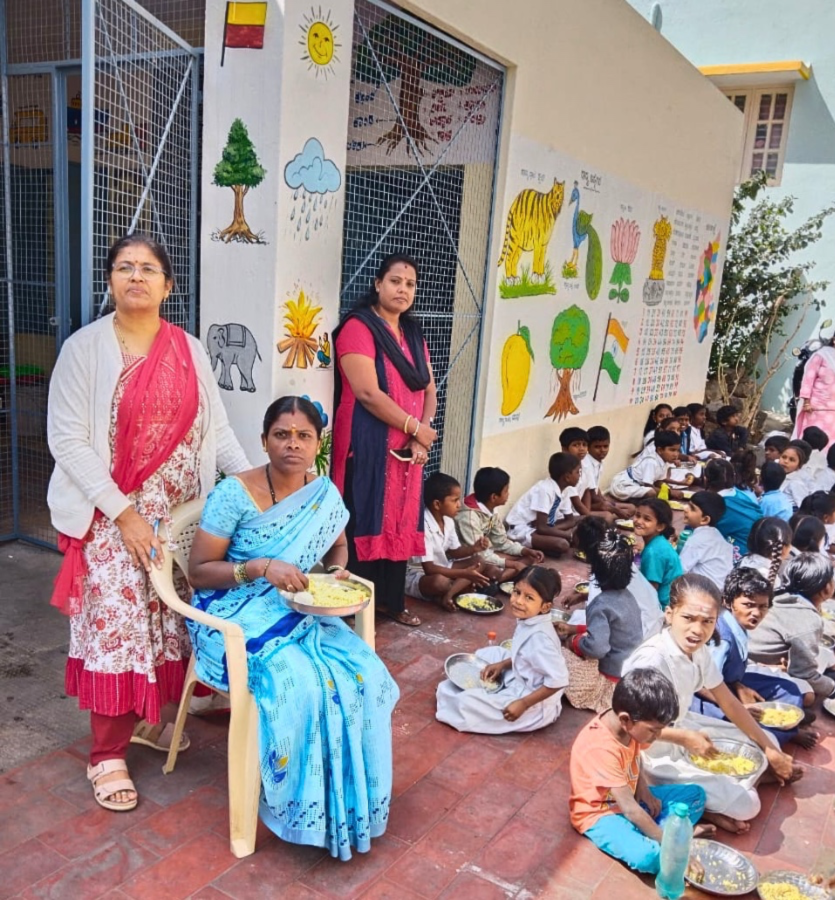
At Government Lower Primary School, Kottigepalya, concerns emerged regarding the quality of midday meals being served to children.
Rather than accepting the situation, SDMC members gathered feedback, documented concerns and engaged with school authorities and service providers. What followed was nearly four months of sustained follow-up and monitoring.
Their persistence led to improvements in meal quality, benefiting approximately 150 children. This highlights one of the most powerful functions of SDMCs: enabling communities to hold public systems accountable while remaining constructive partners in problem-solving.
“I am Manvitha from Summanahalli. In March 2025, the eggs and sambar served in my school were of poor quality—they had a bad smell, and many of my classmates threw the food away without eating it. My friends and I raised this issue with our teachers, and it was later discussed during the SDMC meeting. With the support of our Headmistress, SDMC members and teachers, the concern was addressed. Today, our school receives fresh, good-quality meals, and we happily enjoy our food every day. This experience taught me that when children raise their voices about their rights, positive change is possible.”
Perhaps the most significant outcome of this journey cannot be measured through repaired infrastructure, meeting records or enrolment numbers alone. The deeper transformation lies in the growth of community leadership and agency.
This shift is at the heart of Saamuhika Shakti's approach. Sustainable change is not driven by programmes alone, but by strengthening the capacity, confidence and agency of communities to engage with and influence the systems that affect their lives. SDMCs became an important platform through which community members could raise concerns, advocate for children's needs, shape school priorities and work alongside teachers and school administrators to address challenges.
As community members gained a seat at the table, they also gained the confidence to exercise leadership. Parents who once viewed schools as institutions operating beyond their influence are now helping shape decisions and priorities. Community members who rarely engaged with public systems are advocating for children's rights and holding institutions accountable. Women from waste-picking communities are participating in governance processes, strengthening their voice within both schools and their neighbourhoods.
Importantly, this increased agency has translated into better educational outcomes. From improving school infrastructure and strengthening child safety measures to supporting enrollment drives and addressing concerns related to nutrition and attendance, SDMC members have demonstrated how community participation can help create more responsive schools and better learning environments for children.
Of the 589 out-of-school children from waste picking families identified, 497 children from waste-picking families have been enrolled over the past two years (2024–2026).
“I am proud to be part of this journey—from having little role in decision-making to becoming a changemaker in my school. As an SDMC member, I work with teachers, parents, and the community to address challenges and help create a better learning environment for every child.” — Mallamma, SDMC Member, GLPS Thubarahalli
This evolution matters because sustainable educational change rarely comes from programmes alone. It emerges when communities develop the confidence, capacity and legitimacy to lead. As Sumithra A.T., Headmistress of GLPS Muneshwara Nagar, reflects:
“I am incredibly proud of the impact our SDMC members from waste-picking families have made. Their dedication goes far beyond monitoring school activities. Through door-to-door visits, they have helped bring dropout and never-enrolled children back to school. Their daily commitment to ensuring children travel home safely shows a deep care for child wellbeing, and our entire staff are deeply grateful for their partnership in driving the overall development of our school.”
The experiences from these schools demonstrate that effective SDMCs are not simply administrative structures. They are platforms through which communities can exercise ownership over public education. When communities are trusted as partners in governance rather than consulted as an afterthought, schools become more responsive, more inclusive and better equipped to support every child to thrive.
The experiences from Bengaluru offer broader lessons for practitioners, educators and policymakers.
First, representation matters. Bringing historically excluded communities into decision-making spaces strengthens both legitimacy and responsiveness.
Second, participation requires investment. Community ownership does not emerge automatically; it grows through trust-building, mentorship and consistent engagement.
Third, accountability works best when it is collaborative. The most successful examples involved schools, communities and support organisations working together to address challenges rather than operating in isolation.
Most importantly, these stories remind us that communities are not merely stakeholders in education. They are co-creators of educational outcomes. Every repaired toilet, every child brought back to school, every improved meal and every well-attended SDMC meeting reflects something larger: a growing sense of collective ownership over children's futures. When communities move from the margins to the centre of decision-making, schools become more accountable, more responsive and more capable of supporting every child to thrive.
How enabling waste pickers to participate in School Development and Monitoring Committees (SDMCs) is strengthening their ability to influence decisions that shape their children's education.
By Dr Neelima M, Project Head; Darshana S, Communication Executive; and Revathi Krishnan, Head – Donor Communication, Sparsha Trust
Across Karnataka, School Development and Monitoring Committees (SDMCs) are among the most important spaces for community participation in public education. Created under the Right to Education framework, they offer parents and community members an opportunity to shape decisions that affect children's learning, wellbeing and school development.
In practice, however, many SDMCs struggle to realise this potential. Meetings may be irregular, participation limited and decision-making concentrated among a few individuals.
Yet when communities move from being consulted to actively shaping decisions, SDMCs can become powerful vehicles for accountability, ownership and change.
This is the story emerging from several government schools supported by Sparsha Trust under the Saamuhika Shakti initiative in Bengaluru, where waste-picking communities are moving from the margins of school governance to the centre of decision-making.
Understanding SDMCs
School Development and Monitoring Committees bring together parents, teachers and community representatives to support school development, monitor enrolment and attendance, oversee the use of grants and strengthen accountability within government schools. At their best, they create a platform for communities to participate meaningfully in decisions affecting children's education.
For many waste-picking families, participation in formal systems has often been shaped by exclusion. Parents deeply value education and aspire to better futures for their children, yet opportunities to influence decisions affecting schools and learning have historically remained limited.
Livelihood insecurity, long and unpredictable working hours, social stigma and limited engagement with formal institutions can all create barriers to participation in school governance. In some cases, families may also face challenges related to documentation, migration or access to information about their rights and entitlements. As a result, their perspectives are often absent from decisions that directly affect their children's educational experiences.
Recognising this gap, Sparsha Trust worked with schools and communities to strengthen the functioning of SDMCs and create pathways for meaningful participation. Through sustained engagement, mentorship and regular interactions, community members were supported to understand their rights, responsibilities and potential role within school governance.
A significant milestone was the inclusion of 44 members from waste-picking families across SDMCs in 34 government schools in June 2025. The change was not immediate. Building confidence among community members who had rarely been invited into formal decision-making spaces required time, trust and persistence. However, as participation increased, so too did ownership.
What began as attendance at meetings gradually evolved into leadership. Parents started raising concerns, tracking school issues, monitoring children's attendance and advocating for improvements. They were no longer engaging with schools only as parents concerned about their children's education. They became active participants in school governance—raising issues, shaping decisions and holding systems accountable for better outcomes.
Since 2024, SDMC members across schools supported by Sparsha Trust under the Saamuhika Shakti initiative as part of the Phase 2, have shown that participation matters most when it translates into ownership. As community members stepped into decision-making roles, they began addressing everyday challenges, strengthening accountability and shaping outcomes that improved children's experiences of school.
At Government Kannada Higher Primary School (GKHPS), SR Nagar, concerns about damaged toilet facilities surfaced through the school's suggestion box.
Rather than treating the issue as a routine complaint, teachers and SDMC members collectively discussed possible solutions. Recognising that safe sanitation facilities were critical to children's dignity, health and attendance, they approached an external donor for support. The resulting repairs restored the facilities and improved the school environment for all students.
The significance of this story lies not merely in the repaired infrastructure, but in the process itself. Children's voices were heard, community representatives responded and collective action followed.
At Government Urdu Lower Primary School (GULPS), Medi Agrahara, the inclusion of five members from waste-picking families brought renewed energy and ownership to the SDMC.
Monthly meetings became regular practice rather than an administrative requirement. Discussions expanded beyond routine matters to include attendance, school development priorities, use of digital learning resources and concerns emerging from students
The shift reflected a broader transformation: governance became more inclusive and accountability became a shared responsibility among teachers, parents and community members.
At Government Urdu Higher Primary School (GUEHPS), Gangondanahalli, regular SDMC meetings created a platform for collective problem-solving.
Six members from waste-picking families emerged as champions for education within their neighbourhoods. Through outreach and follow-up with families, they helped bring children back into the education system while strengthening awareness around the importance of continued schooling.
Their work illustrates an important truth: communities are often best placed to identify barriers to education because they live alongside the children affected by them.
At Government Lower Primary School, Kottigepalya, concerns emerged regarding the quality of midday meals being served to children.
Rather than accepting the situation, SDMC members gathered feedback, documented concerns and engaged with school authorities and service providers. What followed was nearly four months of sustained follow-up and monitoring.
Their persistence led to improvements in meal quality, benefiting approximately 150 children. This highlights one of the most powerful functions of SDMCs: enabling communities to hold public systems accountable while remaining constructive partners in problem-solving.
“I am Manvitha from Summanahalli. In March 2025, the eggs and sambar served in my school were of poor quality—they had a bad smell, and many of my classmates threw the food away without eating it. My friends and I raised this issue with our teachers, and it was later discussed during the SDMC meeting. With the support of our Headmistress, SDMC members and teachers, the concern was addressed. Today, our school receives fresh, good-quality meals, and we happily enjoy our food every day. This experience taught me that when children raise their voices about their rights, positive change is possible.”
Perhaps the most significant outcome of this journey cannot be measured through repaired infrastructure, meeting records or enrolment numbers alone. The deeper transformation lies in the growth of community leadership and agency.
This shift is at the heart of Saamuhika Shakti's approach. Sustainable change is not driven by programmes alone, but by strengthening the capacity, confidence and agency of communities to engage with and influence the systems that affect their lives. SDMCs became an important platform through which community members could raise concerns, advocate for children's needs, shape school priorities and work alongside teachers and school administrators to address challenges.
As community members gained a seat at the table, they also gained the confidence to exercise leadership. Parents who once viewed schools as institutions operating beyond their influence are now helping shape decisions and priorities. Community members who rarely engaged with public systems are advocating for children's rights and holding institutions accountable. Women from waste-picking communities are participating in governance processes, strengthening their voice within both schools and their neighbourhoods.
Importantly, this increased agency has translated into better educational outcomes. From improving school infrastructure and strengthening child safety measures to supporting enrollment drives and addressing concerns related to nutrition and attendance, SDMC members have demonstrated how community participation can help create more responsive schools and better learning environments for children.
Of the 589 out-of-school children from waste picking families identified, 497 children from waste-picking families have been enrolled over the past two years (2024–2026).
“I am proud to be part of this journey—from having little role in decision-making to becoming a changemaker in my school. As an SDMC member, I work with teachers, parents, and the community to address challenges and help create a better learning environment for every child.” — Mallamma, SDMC Member, GLPS Thubarahalli
This evolution matters because sustainable educational change rarely comes from programmes alone. It emerges when communities develop the confidence, capacity and legitimacy to lead. As Sumithra A.T., Headmistress of GLPS Muneshwara Nagar, reflects:
“I am incredibly proud of the impact our SDMC members from waste-picking families have made. Their dedication goes far beyond monitoring school activities. Through door-to-door visits, they have helped bring dropout and never-enrolled children back to school. Their daily commitment to ensuring children travel home safely shows a deep care for child wellbeing, and our entire staff are deeply grateful for their partnership in driving the overall development of our school.”
The experiences from these schools demonstrate that effective SDMCs are not simply administrative structures. They are platforms through which communities can exercise ownership over public education. When communities are trusted as partners in governance rather than consulted as an afterthought, schools become more responsive, more inclusive and better equipped to support every child to thrive.
The experiences from Bengaluru offer broader lessons for practitioners, educators and policymakers.
First, representation matters. Bringing historically excluded communities into decision-making spaces strengthens both legitimacy and responsiveness.
Second, participation requires investment. Community ownership does not emerge automatically; it grows through trust-building, mentorship and consistent engagement.
Third, accountability works best when it is collaborative. The most successful examples involved schools, communities and support organisations working together to address challenges rather than operating in isolation.
Most importantly, these stories remind us that communities are not merely stakeholders in education. They are co-creators of educational outcomes. Every repaired toilet, every child brought back to school, every improved meal and every well-attended SDMC meeting reflects something larger: a growing sense of collective ownership over children's futures. When communities move from the margins to the centre of decision-making, schools become more accountable, more responsive and more capable of supporting every child to thrive.


