
By Priya Chandrasekar, Project Director - Saamuhika Shakti; Anusuya Ravikumar - Project Lead, Saamuhika Shakti, Udhyam Vyapaar, Udhyam Learning Foundation
For a little over eighteen months now, Udhyam Learning Foundation (ULF) has been an integral part of the Saamuhika Shakti collective, where multiple implementing organisations have joined forces to enable informal waste pickers in Bengaluru to gain greater agency and lead secure, dignified lives. The Vyapaar vertical of ULF focuses on livelihoods and in this project our focus has been on waste pickers who have become nano-entrepreneurs, with a twofold aim: to strengthen their entrepreneurial mindsets and to help them grow their nano businesses in a sustained manner.
Over the last year, we have made steady progress working with more than 175 nano entrepreneurs. As of date, close to 100 nano-entrepreneurs have achieved sustainable income uplift. This journey has been filled with immense learning about entrepreneurship, their context, and the realities of income generation under conditions of deep uncertainty. The insights we have gathered from our on ground work will be shared in a two part article series:
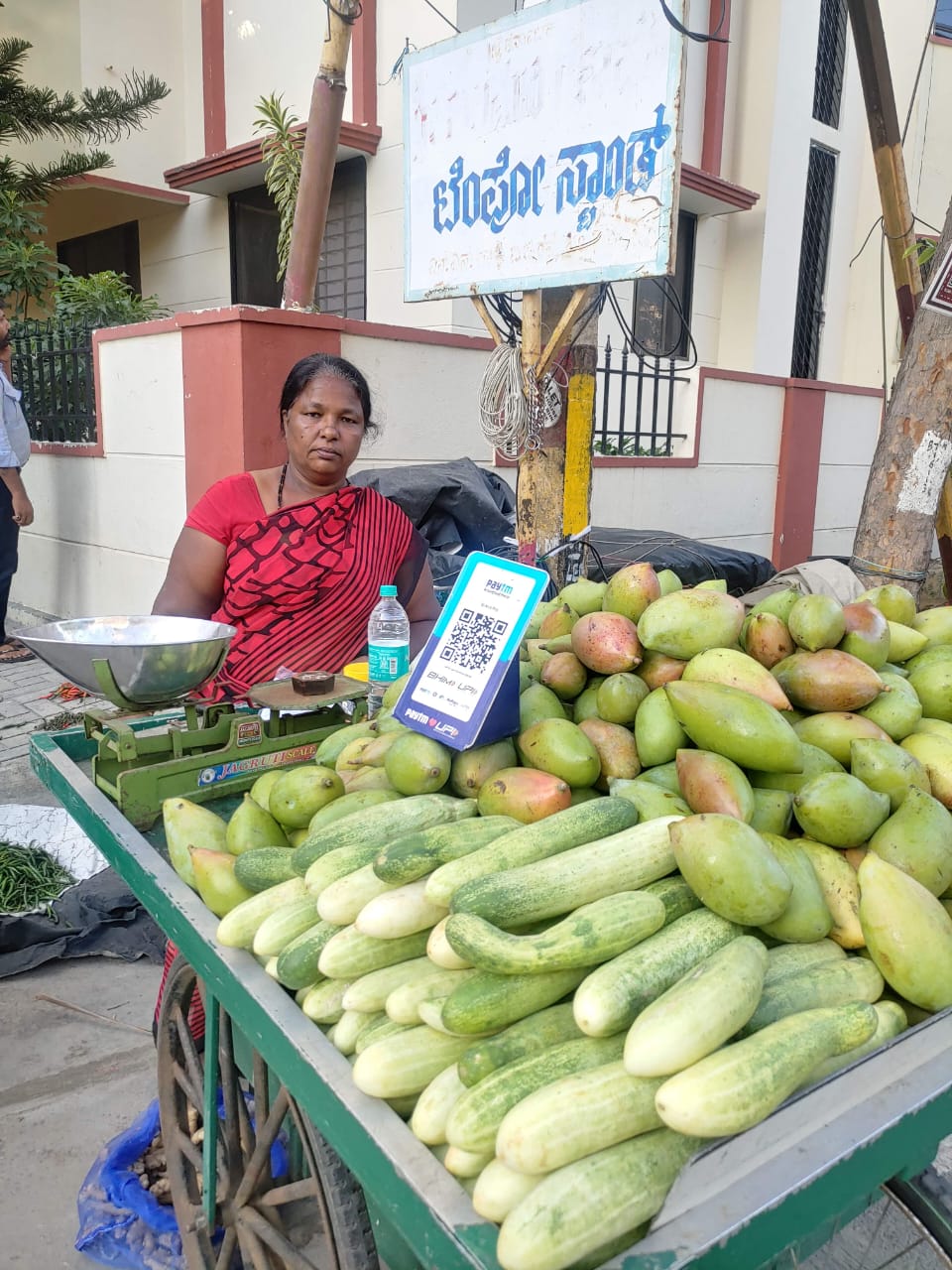
Udhyam’s implementation model typically follows a clear, linear path: identifying an entrepreneur, onboarding and understanding their business context, collecting baseline income details, mentoring and offering business solutions and tracking their income uplift. With a ready list of entrepreneurs from the waste-picking community who had already received skill enhancement training in Phase 1 of Saamuhika Shakti, we assumed this cycle would move faster. However, this was not the case on the ground.
Our field team (“saathis,” as we call them) encountered unexpected challenges. Entrepreneurs frequently became untraceable as phone numbers changed, homes shifted, or families migrated out of Bengaluru. Some discontinued their businesses altogether, some switched to different activities, others ran their enterprises only intermittently. Even foundational assumptions of what constituted a “business” were far more fluid than expected.
What puzzled us even more was the lack of continuity in running a business—and the ease with which entrepreneurs were starting, stopping, pausing or shifting their business activities altogether. This also led us to revisit the principles we had long taken for granted as students of commerce — for instance, the ‘going concern concept’, which assumes that a business will continue operating for a reasonably long period and meet its commitments, and the ‘business entity concept’, which treats the business and its owner as financially distinct. Instead, entrepreneurship here was fluid, intermittent, and deeply embedded in everyday survival.
At this stage, even though the slow pace of progress was discouraging, our saathis persisted - they engaged more regularly and deeply with the entrepreneurs. It is difficult to determine whether increased trust led to deeper conversations or vice versa, but as the entrepreneurs began opening up about themselves, their lives, aspirations, anxieties, household pressures, and the factors shaping their decisions, we also gained valuable insights that reshaped our understanding of entrepreneurship within the waste-picking community.
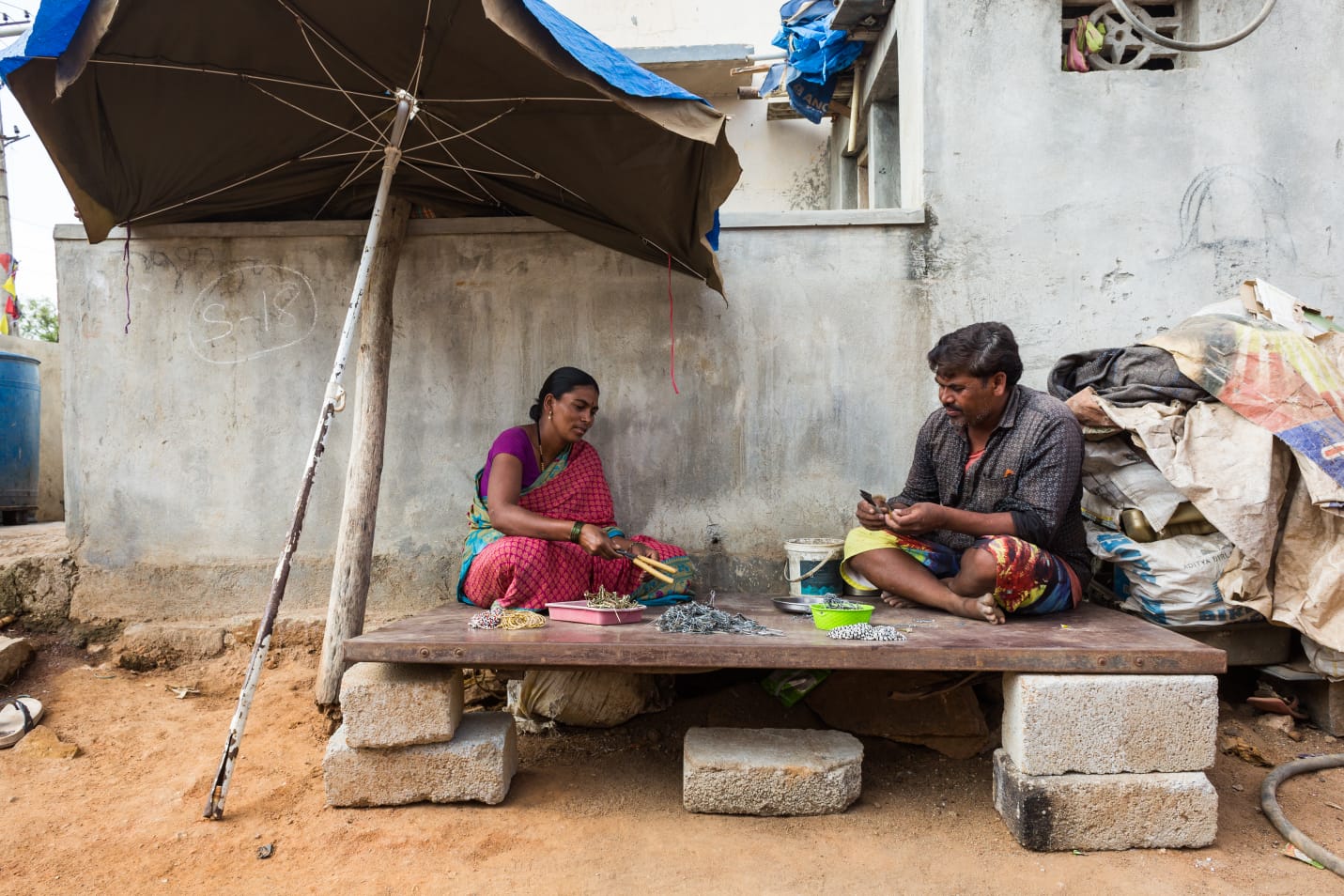
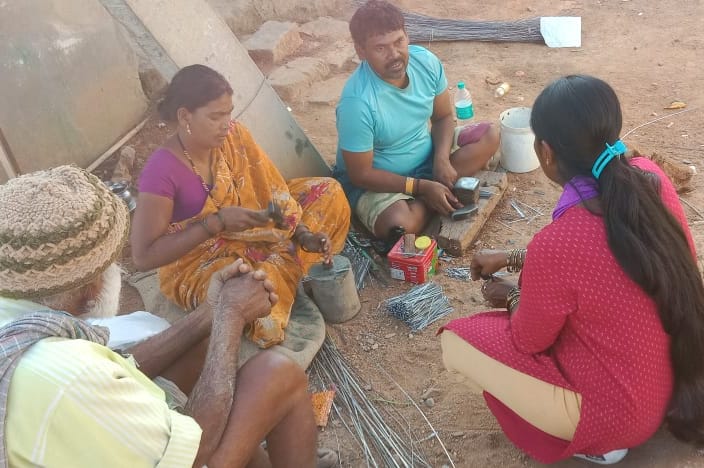
Business as a means to supplement income: For entrepreneurs in the waste-picking community, running a nano enterprise is primarily a way to supplement household income. More than half were already engaged in housekeeping, waste picking, cleaning, labour, or similar work—not only as their main occupation but also as their most predictable and “secure” source of income. Some preferred continuing traditional activities like hair picking, which they often engaged in collectively at the community level. While a few relied solely on their enterprise for income, many ran their business after their primary work or, in some cases, as a side hustle. This had a bearing not only on the scale of their operations but also their attitude toward continuity.
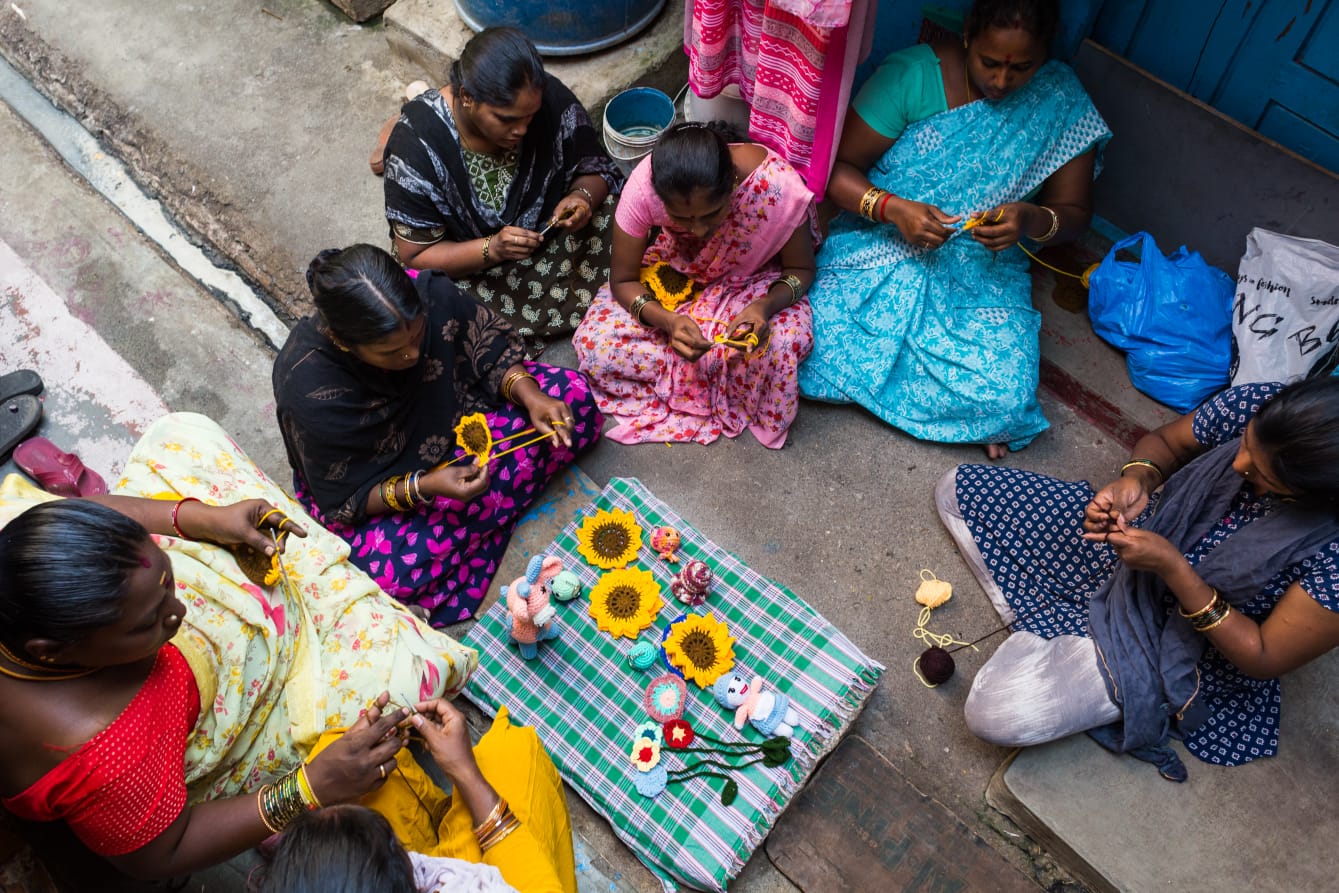
Flexibility over consistency: Since the nano business was not the primary livelihood, it allowed them the flexibility to start, stop or pause the enterprise based on shifting priorities or in search of more profitable opportunities. Financial emergencies, debt burdens, or family obligations pushed them toward wage work that guaranteed immediate returns rather than business activities with uncertain payout. For example, women paused crochet work to take on additional housekeeping jobs that paid instantly. Women also frequently travelled to their villages for festivals, religious occasions, or seasonal family needs, often staying away for one to two months. As a result, many businesses operated for only 9–10 months a year.
Some even practised seasonal entrepreneurship—such as selling jackfruit for one to two months during summer, earning well during that period, and remaining inactive for the rest of the year. While this did not align with conventional expectations of a stable enterprise, it made perfect sense in their context.
Debt dictates: Debt burden emerged as a stumbling factor for sustaining their enterprise. When faced with personal loans, mounting interest payments or urgent expenses, women redirected both business earnings and wages toward these requirements. This left very little for reinvestment, impacted the working capital cycle and sometimes disrupted business operations. The waste pickers had very limited or almost zero access to formal or affordable credit. Being over-leveraged compounded the issue and taking loans from the unorganised sector exposed them to high interest rates and coercive repayment practices. In quite a few cases, women also ended up repaying loans taken by other family members. The pressure from money lenders led a few to flee from their community.
Business, loosely defined: A wide range of economic activities were classified as “business,” including those involving little to no value addition (hair picking, waste picking), those dependent on rudimentary skills (basic tailoring, and those currently operating as job work (where they get paid only for labour) rather than independent enterprise (crochet, wire basket). The boundary between “activity” and “enterprise” was rather nebulous.
Market access gaps: Products such as scented candles or crochet items had no market in their local neighbourhood, their buyers belonged to a different consumer segment which the women had difficulty accessing due to unfamiliarity, limited mobility, and social barriers. Further there were gaps in quality / finish. Where the nano-entrepreneurs served their local community, in some cases there were caste based boundaries or in others the wastepicking ‘tag’ acted as a barrier. They also faced social/cultural barriers in going out of their community and exploring markets outside. All these limited their market access.
These learnings helped us understand entrepreneurship in the waste picking communities, not as a standalone economic activity, but as a far more layered livelihood exercise with a complex interplay of factors. The approach to enterprise is fundamentally shaped by their need for immediate, sure and additional earnings. While entrepreneurship supports this, lack of continuity, changing priorities, debt cycles, seasonality, limited skills, and restricted market access influence outcomes.
However, what stood out uniformly was the grit, steely resolve, resilience of the waste picking community and their ability to juggle multiple roles. Our immersion in the community and frontline view of the challenges they navigate everyday, gave us a nuanced understanding of what “entrepreneurship” truly looks like in vulnerable communities. It reinforced the need for an empathetic, grounded and practical approach in sync with their lived realities. Only then can nano-entrepreneurship translate into sustainable and more stable earnings with meaningful increases in income.
These insights are driving our on-ground solutions now. Come back to read about the solutions in our second piece for the Saamuhika Shakti Quarterly in March 2026.
By Priya Chandrasekar, Project Director - Saamuhika Shakti; Anusuya Ravikumar - Project Lead, Saamuhika Shakti, Udhyam Vyapaar, Udhyam Learning Foundation
For a little over eighteen months now, Udhyam Learning Foundation (ULF) has been an integral part of the Saamuhika Shakti collective, where multiple implementing organisations have joined forces to enable informal waste pickers in Bengaluru to gain greater agency and lead secure, dignified lives. The Vyapaar vertical of ULF focuses on livelihoods and in this project our focus has been on waste pickers who have become nano-entrepreneurs, with a twofold aim: to strengthen their entrepreneurial mindsets and to help them grow their nano businesses in a sustained manner.
Over the last year, we have made steady progress working with more than 175 nano entrepreneurs. As of date, close to 100 nano-entrepreneurs have achieved sustainable income uplift. This journey has been filled with immense learning about entrepreneurship, their context, and the realities of income generation under conditions of deep uncertainty. The insights we have gathered from our on ground work will be shared in a two part article series:
Udhyam’s implementation model typically follows a clear, linear path: identifying an entrepreneur, onboarding and understanding their business context, collecting baseline income details, mentoring and offering business solutions and tracking their income uplift. With a ready list of entrepreneurs from the waste-picking community who had already received skill enhancement training in Phase 1 of Saamuhika Shakti, we assumed this cycle would move faster. However, this was not the case on the ground.
Our field team (“saathis,” as we call them) encountered unexpected challenges. Entrepreneurs frequently became untraceable as phone numbers changed, homes shifted, or families migrated out of Bengaluru. Some discontinued their businesses altogether, some switched to different activities, others ran their enterprises only intermittently. Even foundational assumptions of what constituted a “business” were far more fluid than expected.
What puzzled us even more was the lack of continuity in running a business—and the ease with which entrepreneurs were starting, stopping, pausing or shifting their business activities altogether. This also led us to revisit the principles we had long taken for granted as students of commerce — for instance, the ‘going concern concept’, which assumes that a business will continue operating for a reasonably long period and meet its commitments, and the ‘business entity concept’, which treats the business and its owner as financially distinct. Instead, entrepreneurship here was fluid, intermittent, and deeply embedded in everyday survival.
At this stage, even though the slow pace of progress was discouraging, our saathis persisted - they engaged more regularly and deeply with the entrepreneurs. It is difficult to determine whether increased trust led to deeper conversations or vice versa, but as the entrepreneurs began opening up about themselves, their lives, aspirations, anxieties, household pressures, and the factors shaping their decisions, we also gained valuable insights that reshaped our understanding of entrepreneurship within the waste-picking community.
Business as a means to supplement income: For entrepreneurs in the waste-picking community, running a nano enterprise is primarily a way to supplement household income. More than half were already engaged in housekeeping, waste picking, cleaning, labour, or similar work—not only as their main occupation but also as their most predictable and “secure” source of income. Some preferred continuing traditional activities like hair picking, which they often engaged in collectively at the community level. While a few relied solely on their enterprise for income, many ran their business after their primary work or, in some cases, as a side hustle. This had a bearing not only on the scale of their operations but also their attitude toward continuity.
Flexibility over consistency: Since the nano business was not the primary livelihood, it allowed them the flexibility to start, stop or pause the enterprise based on shifting priorities or in search of more profitable opportunities. Financial emergencies, debt burdens, or family obligations pushed them toward wage work that guaranteed immediate returns rather than business activities with uncertain payout. For example, women paused crochet work to take on additional housekeeping jobs that paid instantly. Women also frequently travelled to their villages for festivals, religious occasions, or seasonal family needs, often staying away for one to two months. As a result, many businesses operated for only 9–10 months a year.
Some even practised seasonal entrepreneurship—such as selling jackfruit for one to two months during summer, earning well during that period, and remaining inactive for the rest of the year. While this did not align with conventional expectations of a stable enterprise, it made perfect sense in their context.
Debt dictates: Debt burden emerged as a stumbling factor for sustaining their enterprise. When faced with personal loans, mounting interest payments or urgent expenses, women redirected both business earnings and wages toward these requirements. This left very little for reinvestment, impacted the working capital cycle and sometimes disrupted business operations. The waste pickers had very limited or almost zero access to formal or affordable credit. Being over-leveraged compounded the issue and taking loans from the unorganised sector exposed them to high interest rates and coercive repayment practices. In quite a few cases, women also ended up repaying loans taken by other family members. The pressure from money lenders led a few to flee from their community.
Business, loosely defined: A wide range of economic activities were classified as “business,” including those involving little to no value addition (hair picking, waste picking), those dependent on rudimentary skills (basic tailoring, and those currently operating as job work (where they get paid only for labour) rather than independent enterprise (crochet, wire basket). The boundary between “activity” and “enterprise” was rather nebulous.
Market access gaps: Products such as scented candles or crochet items had no market in their local neighbourhood, their buyers belonged to a different consumer segment which the women had difficulty accessing due to unfamiliarity, limited mobility, and social barriers. Further there were gaps in quality / finish. Where the nano-entrepreneurs served their local community, in some cases there were caste based boundaries or in others the wastepicking ‘tag’ acted as a barrier. They also faced social/cultural barriers in going out of their community and exploring markets outside. All these limited their market access.
These learnings helped us understand entrepreneurship in the waste picking communities, not as a standalone economic activity, but as a far more layered livelihood exercise with a complex interplay of factors. The approach to enterprise is fundamentally shaped by their need for immediate, sure and additional earnings. While entrepreneurship supports this, lack of continuity, changing priorities, debt cycles, seasonality, limited skills, and restricted market access influence outcomes.
However, what stood out uniformly was the grit, steely resolve, resilience of the waste picking community and their ability to juggle multiple roles. Our immersion in the community and frontline view of the challenges they navigate everyday, gave us a nuanced understanding of what “entrepreneurship” truly looks like in vulnerable communities. It reinforced the need for an empathetic, grounded and practical approach in sync with their lived realities. Only then can nano-entrepreneurship translate into sustainable and more stable earnings with meaningful increases in income.
These insights are driving our on-ground solutions now. Come back to read about the solutions in our second piece for the Saamuhika Shakti Quarterly in March 2026.


