
By Aparna S, Student Intern at Saamuhika Shakti (May to July 2025); Ekta Sawant, Communications Manager, Saamuhika Shakti
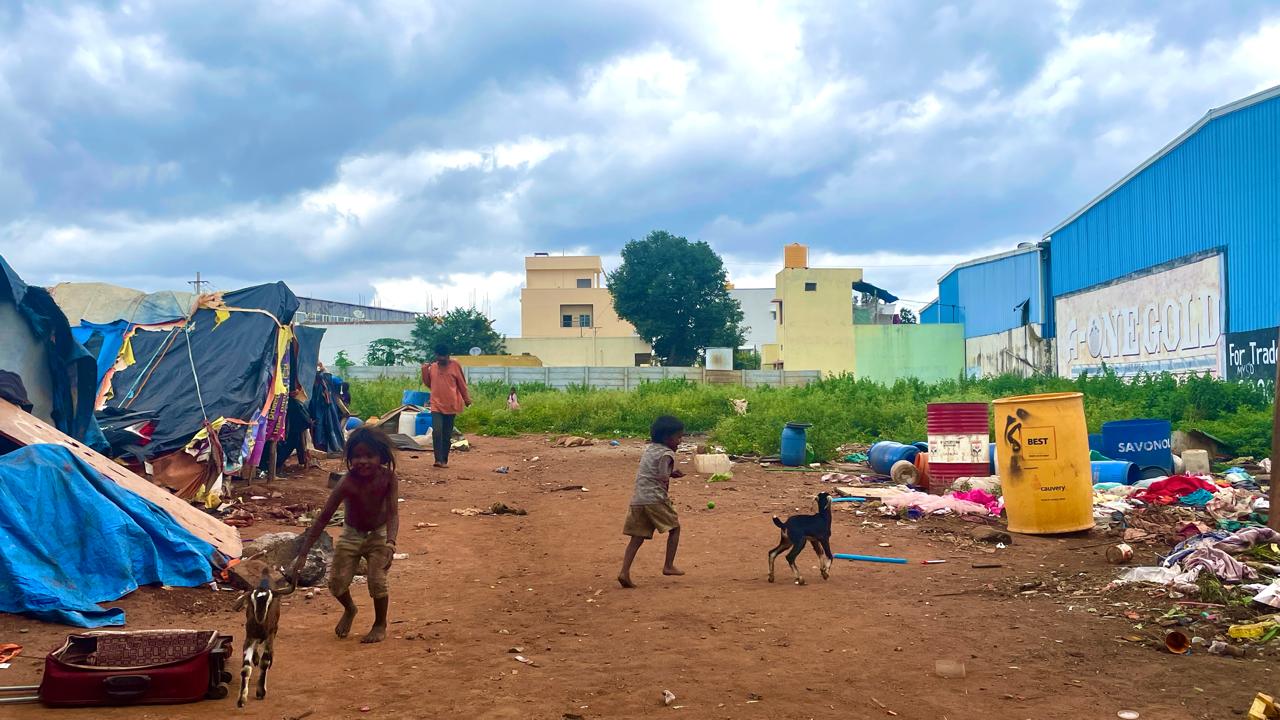
Kadabgere Cross, located in West Bengaluru, is an emerging residential neighbourhood with good transport connectivity. On a small patch of private land owned by a landlord live around 29 waste-picking households, many of whom have migrated from different parts of Karnataka. Their makeshift tents line an overgrown boundary, with goats, ducks, hens, dogs and cats moving freely among them.
Children swing on saris tied to tree branches, while a mother cooks over an open fire and feeds her children on a mat placed under a tree. This is the everyday rhythm of the settlement—and the environment in which 24-year-old Manjula lives with her husband, Naveen, and their three children.
Born in Chikkabanavara, Manjula is the youngest of three siblings. She started waste picking as a child, accompanying her parents to collect recyclables. “Things were okay when my parents were alive. They died when I was ten, and things got really difficult after that,” she recalls. The siblings survived by working long hours every day, often only earning enough for a single meal.
Five years ago, Manjula moved to Kadabgere Cross after marrying Naveen in an inter-religious love marriage—unusual in a locality where most families are linked through kinship or longstanding community ties. Yet the couple were quickly accepted. “He is our friend!” says Ravi, a community member. Religion or caste seldom influence relationships here.
Manjula continues to work as a waste picker, while Naveen works either as a pourakarmika, and at times collects waste with her. Her day begins at 6 am and does not end until late evening, when she finishes sorting the day’s collection and sells it nearby. Dinner is often prepared after 9 pm, and leftover food becomes breakfast for the children. She herself usually skips breakfast, surviving on tea and buying a small lunch while working.
Her eldest daughter, Supreetha, attends the nearby government school, while her younger children, Suma and Lokesh, attend Hasiru Dala’s Buguri Centre.
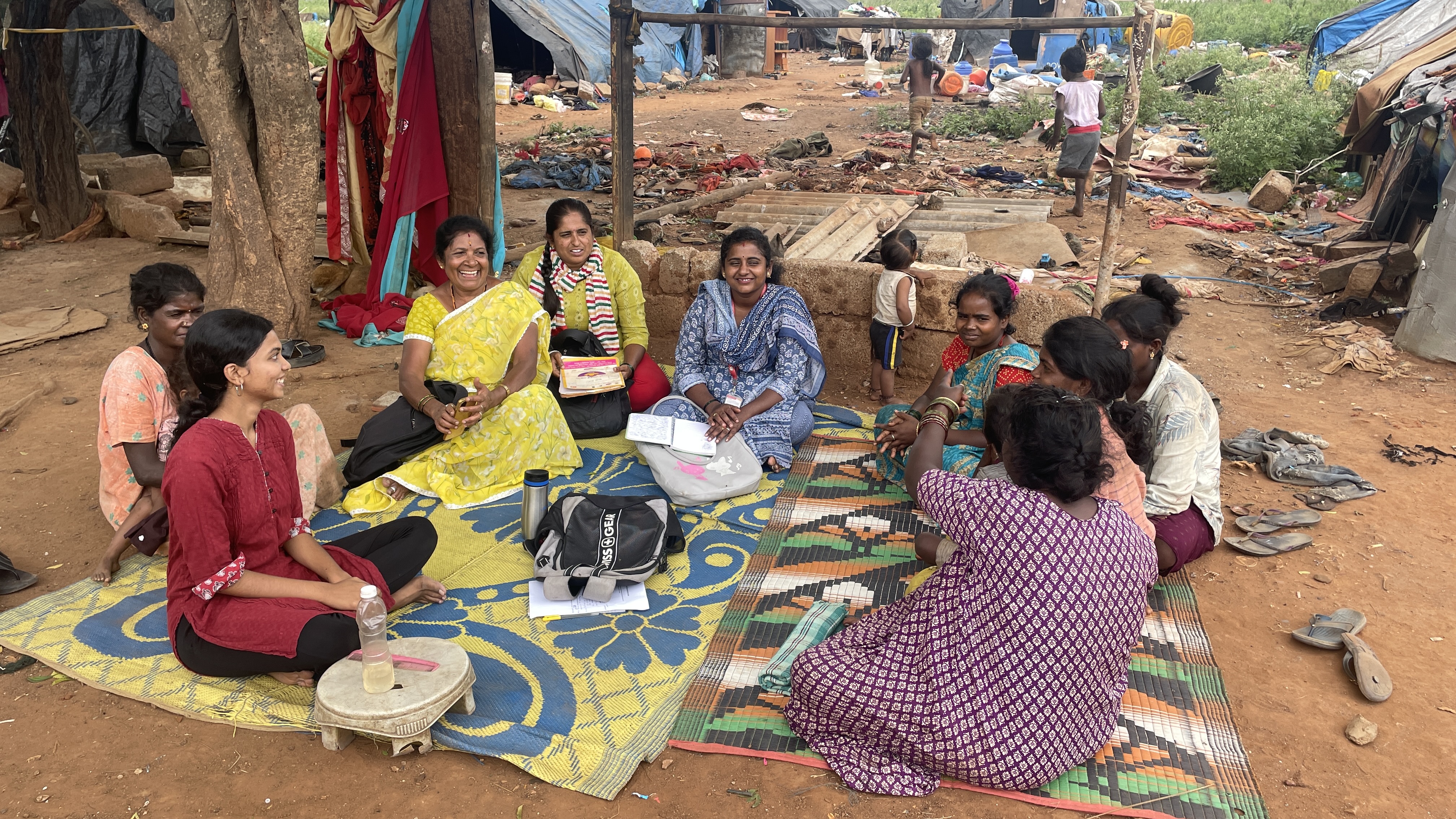
When the Saamuhika Shakti partners first approached the community, they were met with suspicion. Families had previously been cheated by people claiming they would help them secure better housing. “We even threw stones at them,” Malli says with a laugh.
Despite the hostility, Hasiru Dala continued visiting, reassuring residents about their intentions. Gradually the community allowed partners in, and over time trust deepened.
The settlement has faced several challenges: frequent flooding, water contamination, unsafe surroundings due to parked trucks and loitering men, and harassment of girls and young women. Against this backdrop, the work of multiple partners—Hasiru Dala, Bal Raksha Bharat, CARE India, and later Sambhav Foundation and Sparsha Trust—began intersecting with the community’s daily life in distinct yet complementary ways.
Manjula recalls how limited their awareness once was. Many in the community could not sign their names or recall the ages of their children. “We haven’t gone to school, so we don’t know these things,” Ravi explains.
With support from Hasiru Dala, Manjula obtained an Aadhaar card and opened a bank account, which enabled her to use free public transport and begin saving. “Earlier we spent whatever we earned on the same day,” she says.
CARE India provided cycles and vehicles, reducing transportation costs. Several families also acquired goats and hens, diversifying their income. Sambhav Foundation formed a self-help group (SHG) encouraging families to save at least ₹100 a week. Regular workshops deepened financial awareness: “If you spend like this and don’t save, what will your children do?” was a message that stayed with her.
Housing support has been one of the most significant changes. Hasiru Dala’s sustained engagement enabled families to secure Demand Drafts (DDs), and houses have now been sanctioned in Giddenahalli. Residents look forward to the move, which symbolises a fresh start. Many women—including Manjula, Malli and Rani—plan to start small businesses after relocation. As Manjula puts it, “If we set up shops there, people will come to buy. They have to travel far for vegetables now.”
Sexual harassment around the settlement was a persistent problem. Hasiru Dala supported the community in raising the issue formally, helping them file a complaint at the local police station.
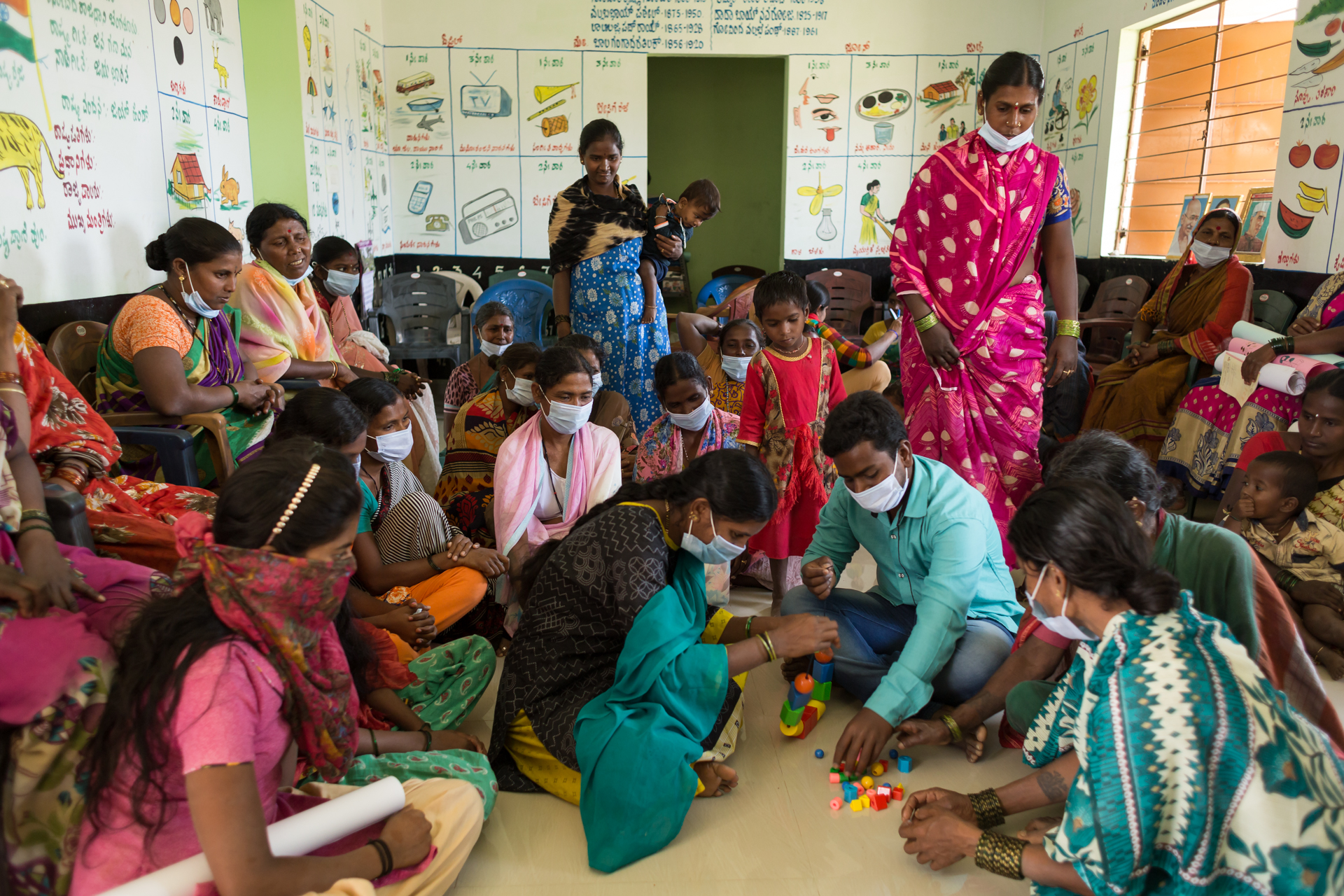
Sambhav Foundation’s gender sessions strengthened understanding of gender equality among women and men alike. “Men and women are equal. Husbands should help with household chores,” participants said—reflecting a shift in attitudes.
Sparsha Trust played a major role in children’s education and documentation. Many children had no birth certificates because they were born at home. Sparsha Trust helped families obtain these, along with Caste and Income certificates, and also improved infrastructure at government schools, provided dictionaries and science kits, and conducted bridge classes through the Buguri Centre run by Hasiru Dala.
Naveen now serves on the School Development Committee. Waste-picking families, previously excluded from such spaces, are now active contributors—an indication that old stigmas are beginning to fade.
The community’s Namma Jagali platform has become a space for collective decision-making.
“When we don’t get water, we go to the Gram Panchayat ourselves,” Manjula says, highlighting the community’s increased confidence in advocating for their rights.
Manjula hopes that five years from now she will no longer be working as a waste picker and that her family’s loans will be fully repaid. Most importantly, she wants her children to build lives with dignity and opportunity.
Reflecting on the past few years, she recognises how much has changed—greater financial stability, stronger awareness, improved documentation, safer spaces, better schooling, and a community increasingly able to articulate and solve its own challenges.
The journey of Kadabgere Cross illustrates how patient, coordinated and community-centred interventions through a collective impact initiative like Saamuhika Shakti can gradually transform a settlement once marked by precarity, distrust and vulnerability into one that is building towards agency, security and hope.
This case study, prepared by Aparna S, a student of MA Economics at Azim Premji University during her internship with Saamuhika Shakti from May to July 2025, is part of the collective’s ongoing commitment to spotlighting the voices and lived experiences of informal waste pickers and their families, in order to strengthen collective impact in Bengaluru.
By Aparna S, Student Intern at Saamuhika Shakti (May to July 2025); Ekta Sawant, Communications Manager, Saamuhika Shakti
Kadabgere Cross, located in West Bengaluru, is an emerging residential neighbourhood with good transport connectivity. On a small patch of private land owned by a landlord live around 29 waste-picking households, many of whom have migrated from different parts of Karnataka. Their makeshift tents line an overgrown boundary, with goats, ducks, hens, dogs and cats moving freely among them.
Children swing on saris tied to tree branches, while a mother cooks over an open fire and feeds her children on a mat placed under a tree. This is the everyday rhythm of the settlement—and the environment in which 24-year-old Manjula lives with her husband, Naveen, and their three children.
Born in Chikkabanavara, Manjula is the youngest of three siblings. She started waste picking as a child, accompanying her parents to collect recyclables. “Things were okay when my parents were alive. They died when I was ten, and things got really difficult after that,” she recalls. The siblings survived by working long hours every day, often only earning enough for a single meal.
Five years ago, Manjula moved to Kadabgere Cross after marrying Naveen in an inter-religious love marriage—unusual in a locality where most families are linked through kinship or longstanding community ties. Yet the couple were quickly accepted. “He is our friend!” says Ravi, a community member. Religion or caste seldom influence relationships here.
Manjula continues to work as a waste picker, while Naveen works either as a pourakarmika, and at times collects waste with her. Her day begins at 6 am and does not end until late evening, when she finishes sorting the day’s collection and sells it nearby. Dinner is often prepared after 9 pm, and leftover food becomes breakfast for the children. She herself usually skips breakfast, surviving on tea and buying a small lunch while working.
Her eldest daughter, Supreetha, attends the nearby government school, while her younger children, Suma and Lokesh, attend Hasiru Dala’s Buguri Centre.
When the Saamuhika Shakti partners first approached the community, they were met with suspicion. Families had previously been cheated by people claiming they would help them secure better housing. “We even threw stones at them,” Malli says with a laugh.
Despite the hostility, Hasiru Dala continued visiting, reassuring residents about their intentions. Gradually the community allowed partners in, and over time trust deepened.
The settlement has faced several challenges: frequent flooding, water contamination, unsafe surroundings due to parked trucks and loitering men, and harassment of girls and young women. Against this backdrop, the work of multiple partners—Hasiru Dala, Bal Raksha Bharat, CARE India, and later Sambhav Foundation and Sparsha Trust—began intersecting with the community’s daily life in distinct yet complementary ways.
Manjula recalls how limited their awareness once was. Many in the community could not sign their names or recall the ages of their children. “We haven’t gone to school, so we don’t know these things,” Ravi explains.
With support from Hasiru Dala, Manjula obtained an Aadhaar card and opened a bank account, which enabled her to use free public transport and begin saving. “Earlier we spent whatever we earned on the same day,” she says.
CARE India provided cycles and vehicles, reducing transportation costs. Several families also acquired goats and hens, diversifying their income. Sambhav Foundation formed a self-help group (SHG) encouraging families to save at least ₹100 a week. Regular workshops deepened financial awareness: “If you spend like this and don’t save, what will your children do?” was a message that stayed with her.
Housing support has been one of the most significant changes. Hasiru Dala’s sustained engagement enabled families to secure Demand Drafts (DDs), and houses have now been sanctioned in Giddenahalli. Residents look forward to the move, which symbolises a fresh start. Many women—including Manjula, Malli and Rani—plan to start small businesses after relocation. As Manjula puts it, “If we set up shops there, people will come to buy. They have to travel far for vegetables now.”
Sexual harassment around the settlement was a persistent problem. Hasiru Dala supported the community in raising the issue formally, helping them file a complaint at the local police station.
Sambhav Foundation’s gender sessions strengthened understanding of gender equality among women and men alike. “Men and women are equal. Husbands should help with household chores,” participants said—reflecting a shift in attitudes.
Sparsha Trust played a major role in children’s education and documentation. Many children had no birth certificates because they were born at home. Sparsha Trust helped families obtain these, along with Caste and Income certificates, and also improved infrastructure at government schools, provided dictionaries and science kits, and conducted bridge classes through the Buguri Centre run by Hasiru Dala.
Naveen now serves on the School Development Committee. Waste-picking families, previously excluded from such spaces, are now active contributors—an indication that old stigmas are beginning to fade.
The community’s Namma Jagali platform has become a space for collective decision-making.
“When we don’t get water, we go to the Gram Panchayat ourselves,” Manjula says, highlighting the community’s increased confidence in advocating for their rights.
Manjula hopes that five years from now she will no longer be working as a waste picker and that her family’s loans will be fully repaid. Most importantly, she wants her children to build lives with dignity and opportunity.
Reflecting on the past few years, she recognises how much has changed—greater financial stability, stronger awareness, improved documentation, safer spaces, better schooling, and a community increasingly able to articulate and solve its own challenges.
The journey of Kadabgere Cross illustrates how patient, coordinated and community-centred interventions through a collective impact initiative like Saamuhika Shakti can gradually transform a settlement once marked by precarity, distrust and vulnerability into one that is building towards agency, security and hope.
This case study, prepared by Aparna S, a student of MA Economics at Azim Premji University during her internship with Saamuhika Shakti from May to July 2025, is part of the collective’s ongoing commitment to spotlighting the voices and lived experiences of informal waste pickers and their families, in order to strengthen collective impact in Bengaluru.


