
How one waste picker built a circular textile enterprise that creates opportunity for herself, her community and the circular economy.
When the Textile Recovery Facility (TRF) in Hirandahalli, Bengaluru, opened its doors in August 2024, it was built on a simple but ambitious vision: to create an inclusive circular textile waste management business that generates livelihoods for waste picker communities while reducing the environmental burden of textile waste. Started by waste picker turned entrepreneur Indumati with support from Circular Apparel Innovation Factory (CAIF), an Intellecap initiative, and Hasiru Dala, the facility sits at the heart of a growing effort to recover value from post-consumer textiles while generating assured livelihood opportunities for waste pickers working at the frontlines of waste management. Two years on, the TRF has evolved into much more than a sorting centre. It has become a hub for innovation, enterprise and community leadership, demonstrating how circular systems can create both environmental and economic impact.
Photos by: Vinod Sebastian
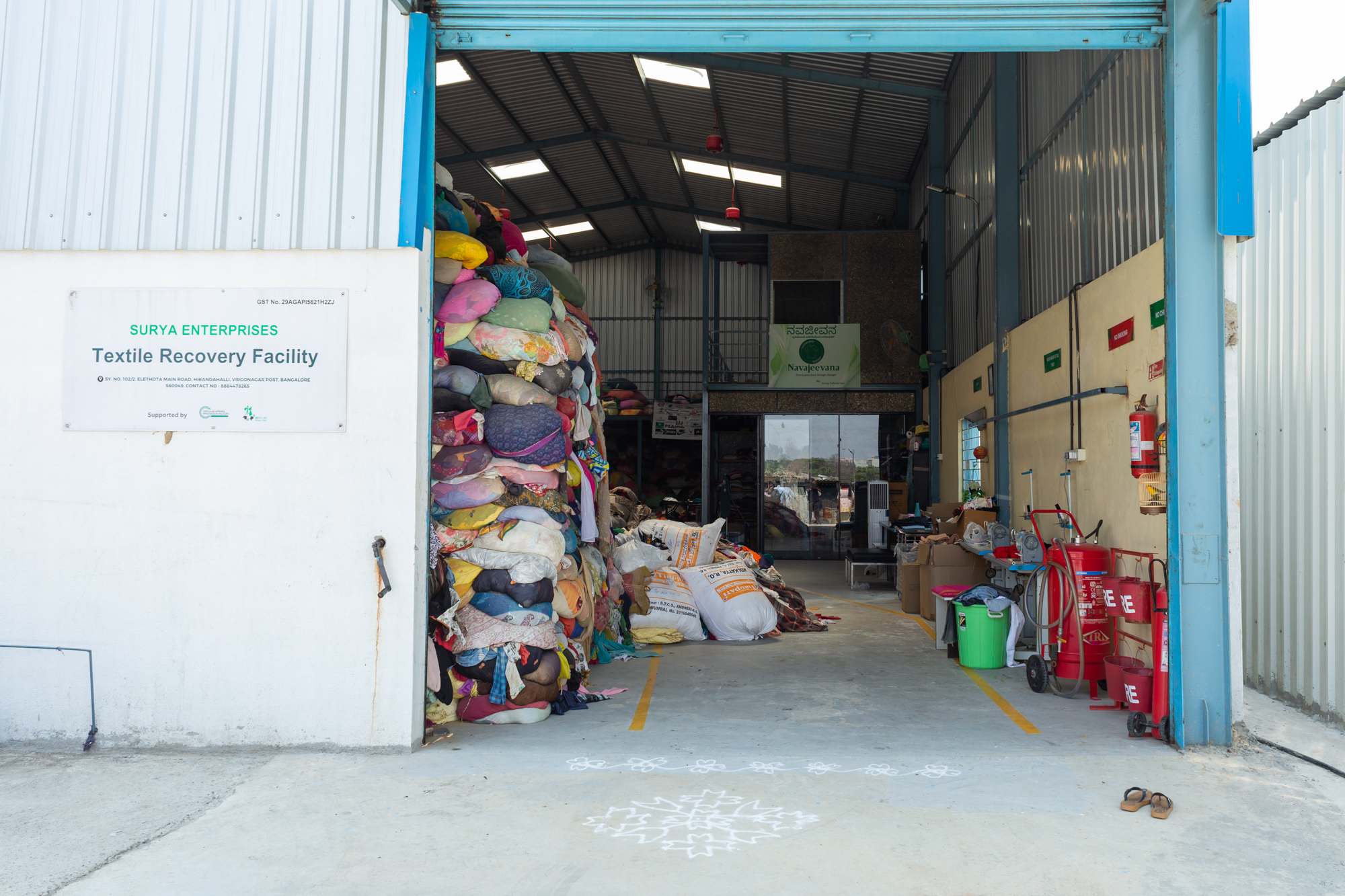
From the outside, the TRF resembles a modest industrial warehouse. Inside, however, thousands of kilograms of discarded textiles pass through every month, beginning a carefully managed journey away from landfills and back into the circular economy.
.jpg)
At the centre of the operation is Indumathi, a waste picker turned entrepreneur whose leadership reflects the core philosophy of the model: placing waste picker communities at the forefront of decision-making and enterprise.
.jpg)
Textiles collected through Dry Waste Collection Centres, institutional, individual and community collection drives across Bengaluru are aggregated at the facility, creating the volumes needed to unlock new market opportunities and recovery pathways.
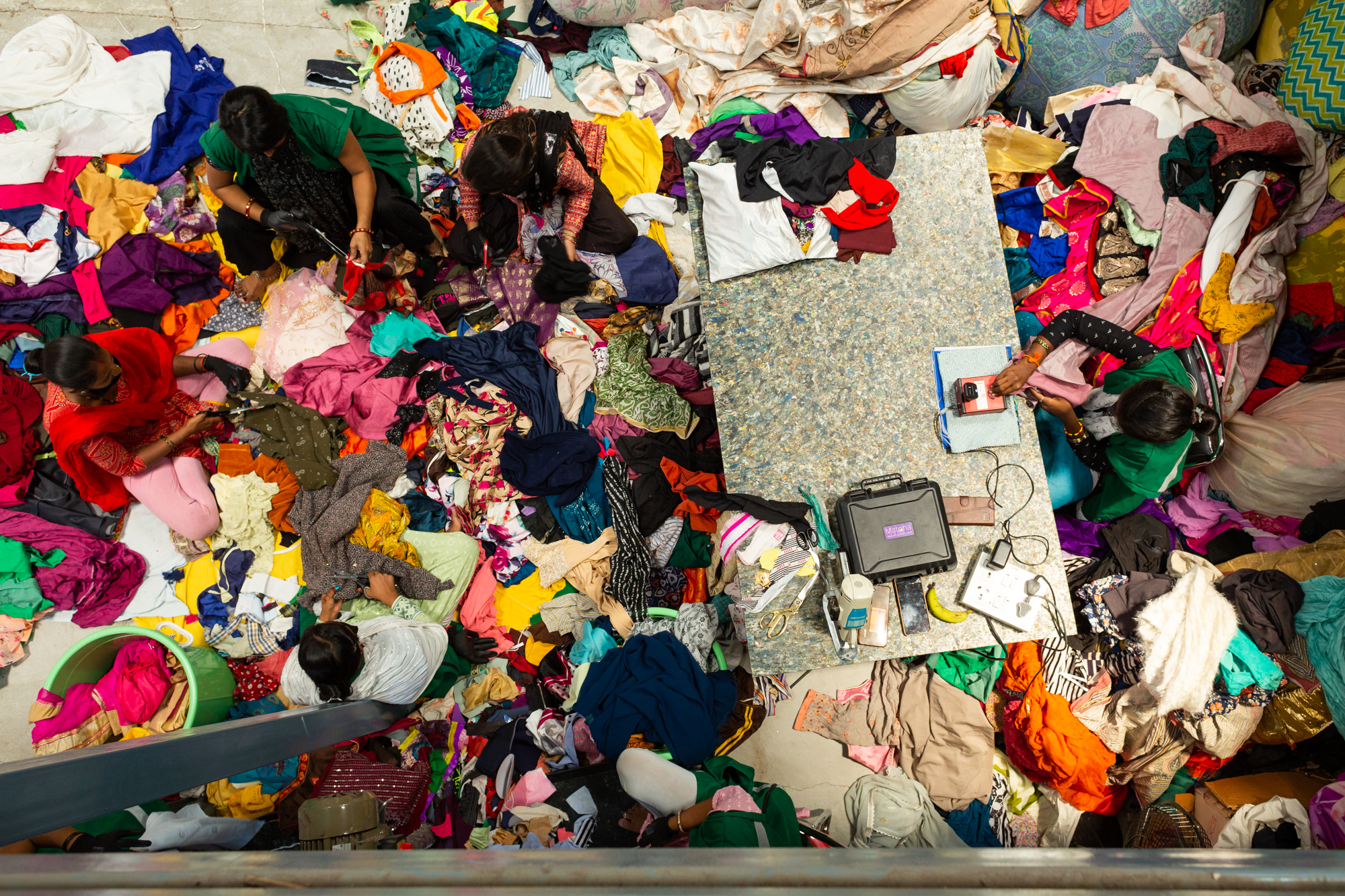
Every item that enters the facility is assessed by trained workers and sorted according to type, quality, colour and condition. This careful process determines where each textile will ultimately be directed within the value chain. What appears to be a mountain of discarded clothing is, in reality, a collection of opportunities. Some textiles are suitable for resale, others for recycling or upcycling, while materials with limited reuse potential are channelled into alternative applications.
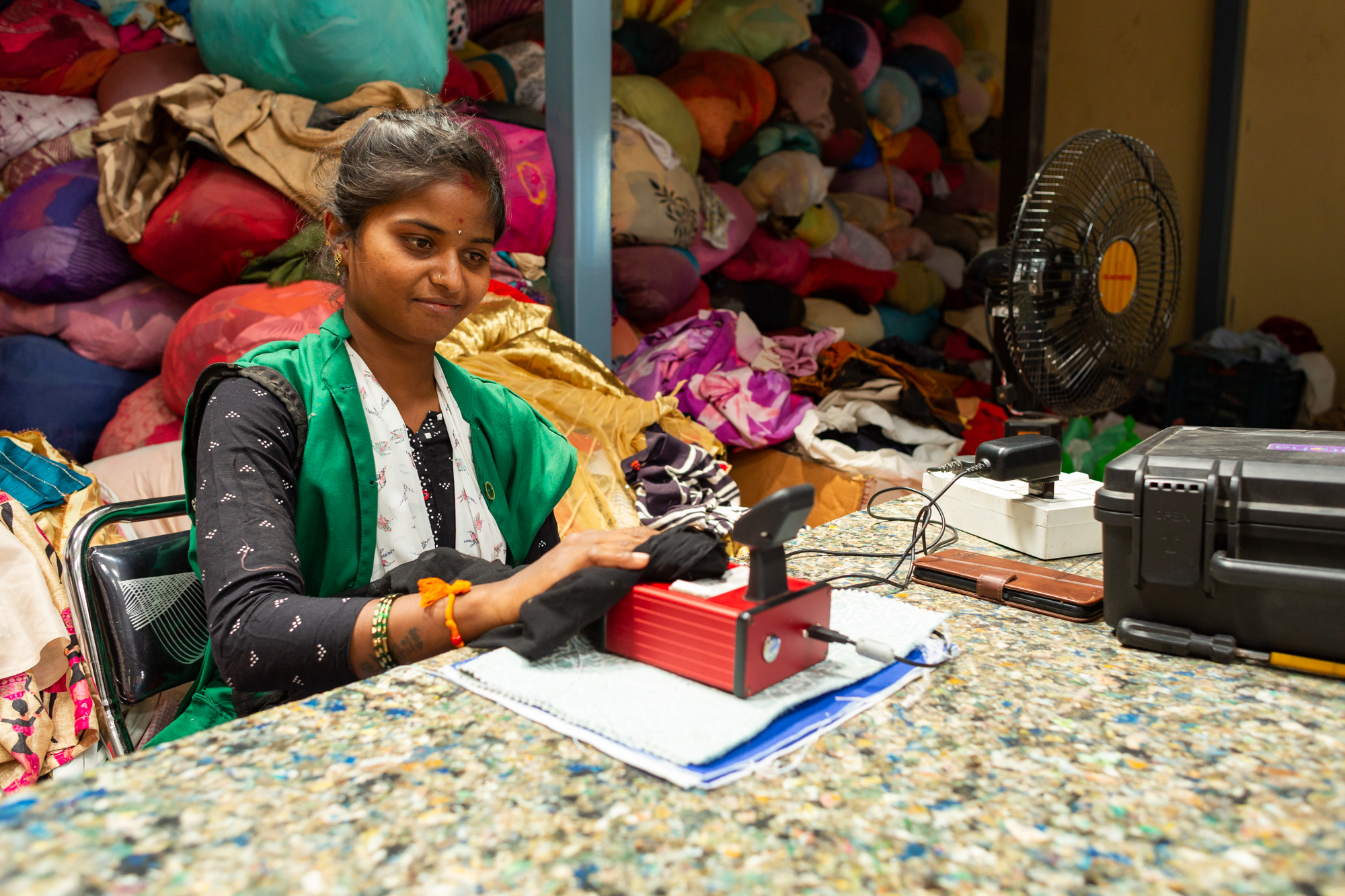
The facility uses Matoha, a textile identification device that helps determine fibre blends and material composition. By improving sorting accuracy, it enables better market matching and higher value recovery.
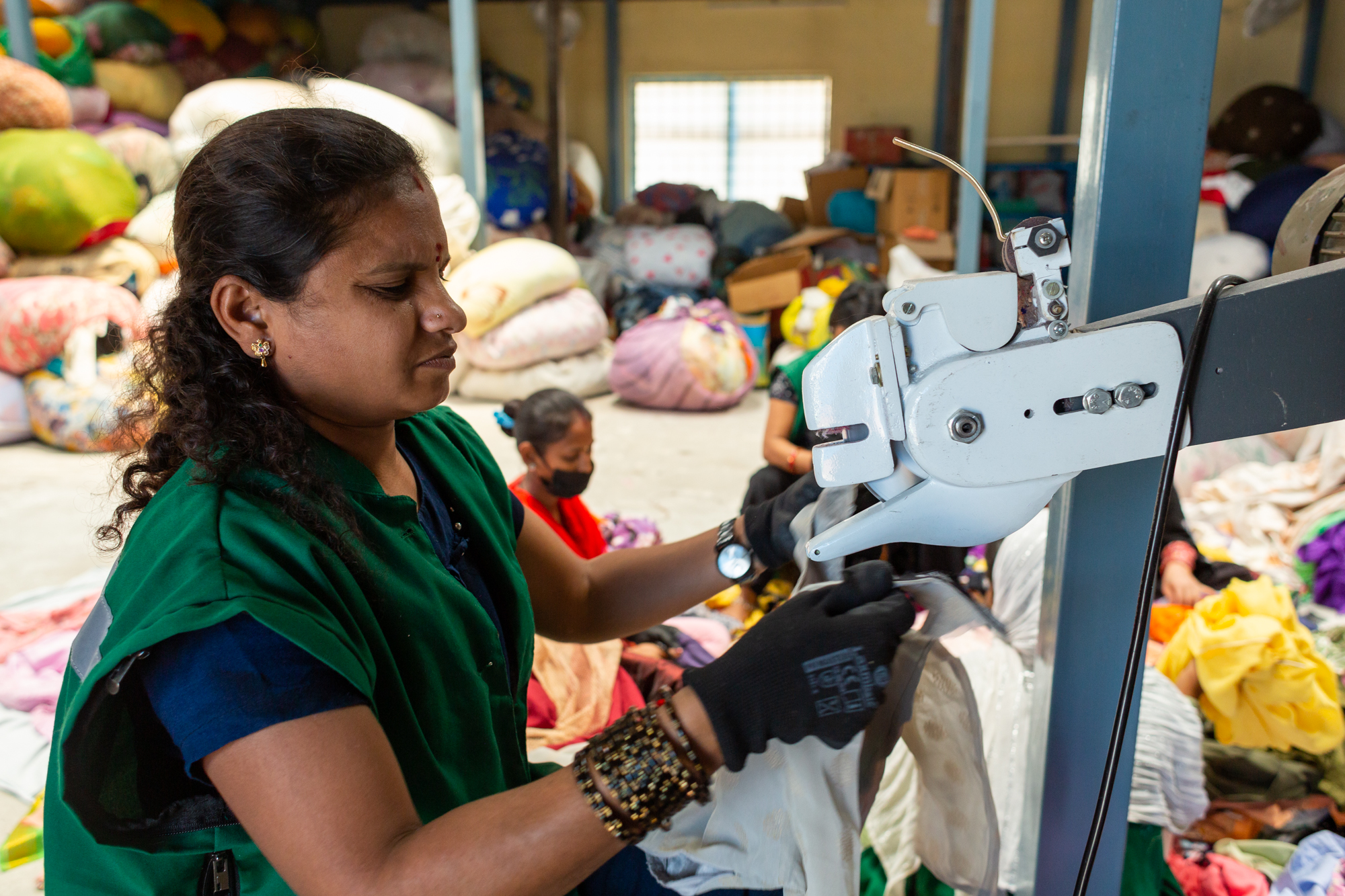
The facility uses Matoha, a textile identification device that helps determine fibre blends and material composition. By improving sorting accuracy, it enables better market matching and higher value recovery.
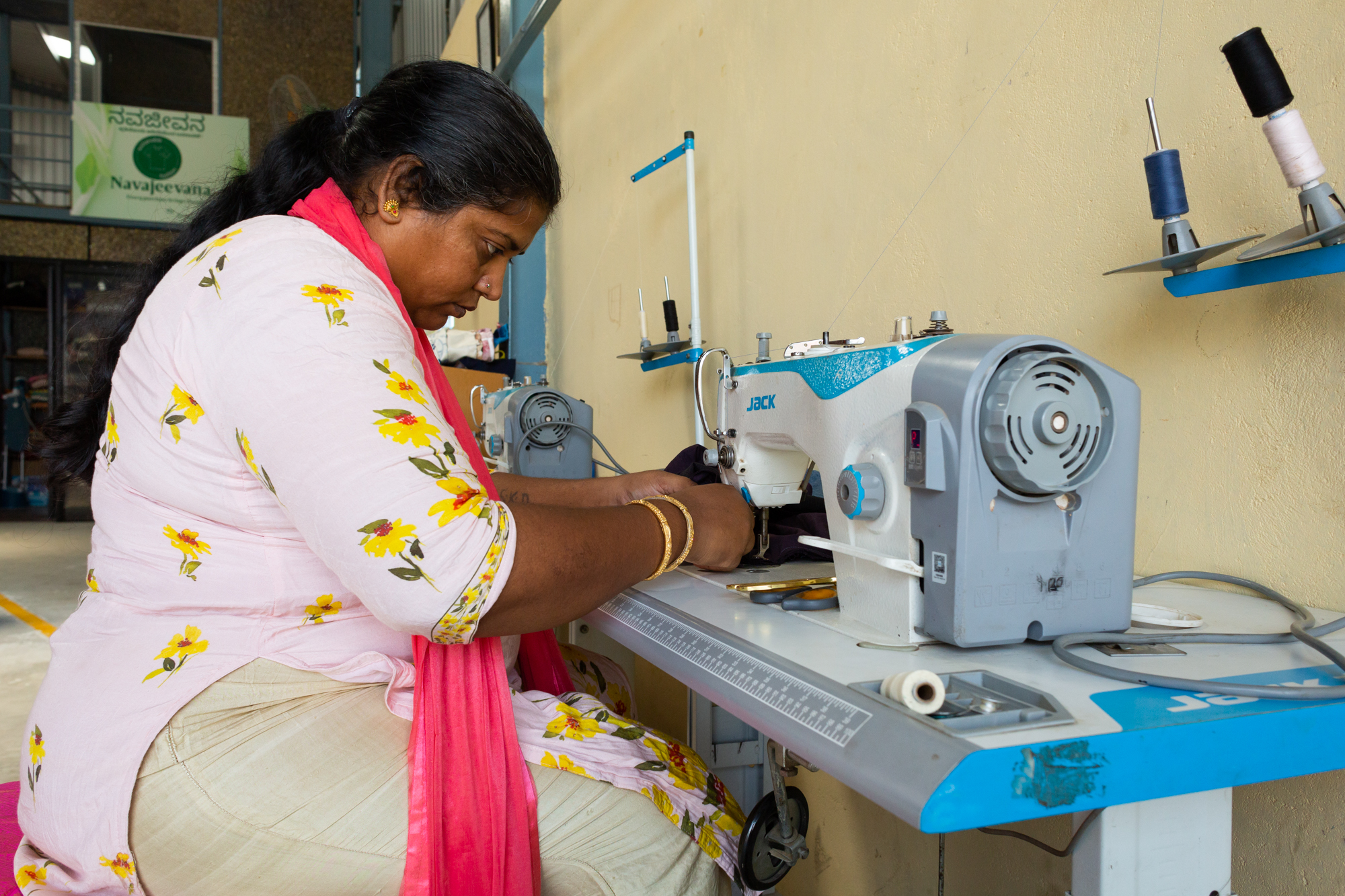
A dedicated refurbishment unit allows garments to be repaired and restored before re-entering the market. In doing so, the facility prioritises reuse before recycling, helping extend the life of valuable materials.
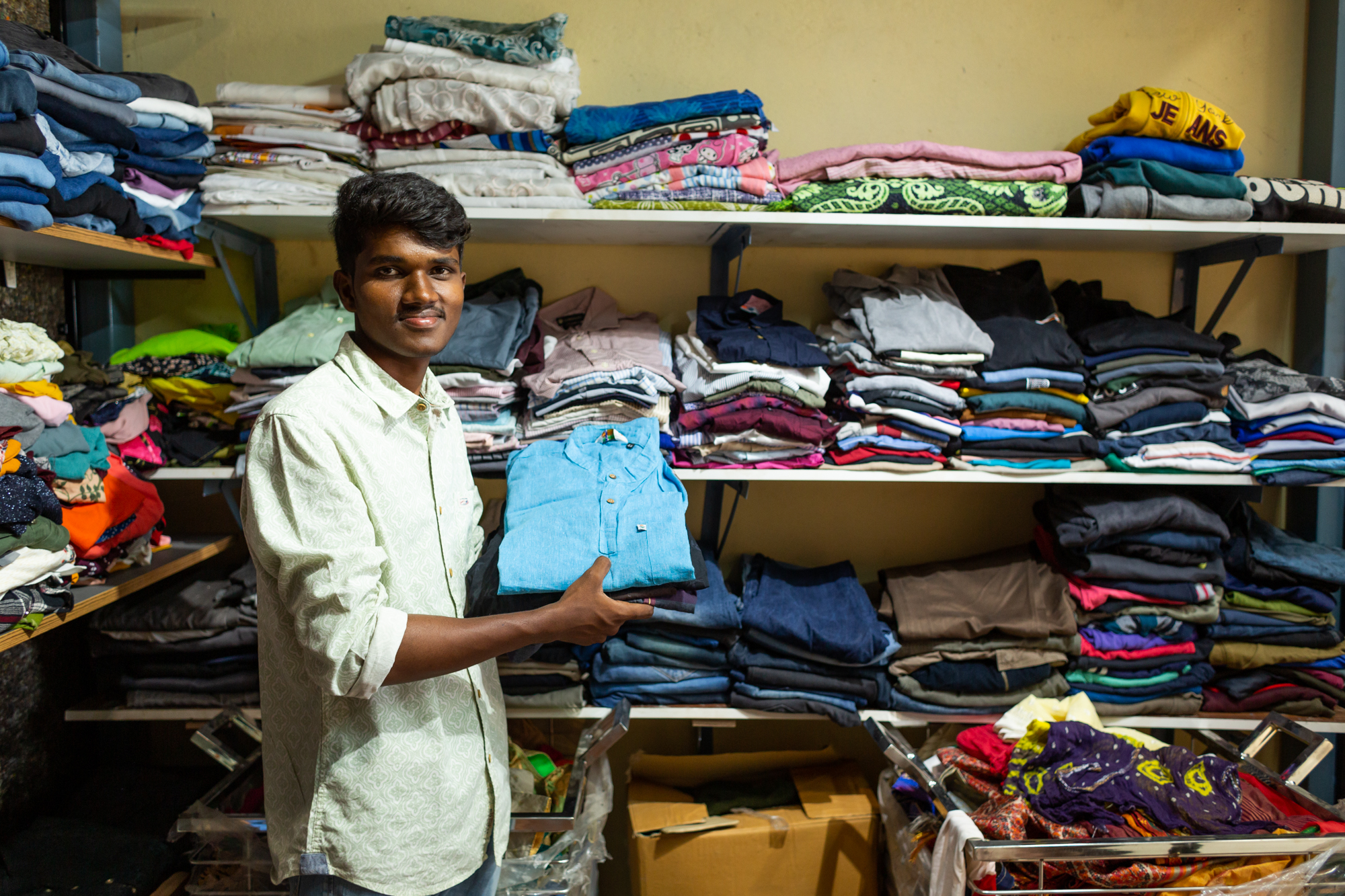
Clothing in good condition is displayed at Navajeevana, the thrift store housed within the TRF. From here, garments are sold directly to customers or through pop-up thrift events organised across the city.
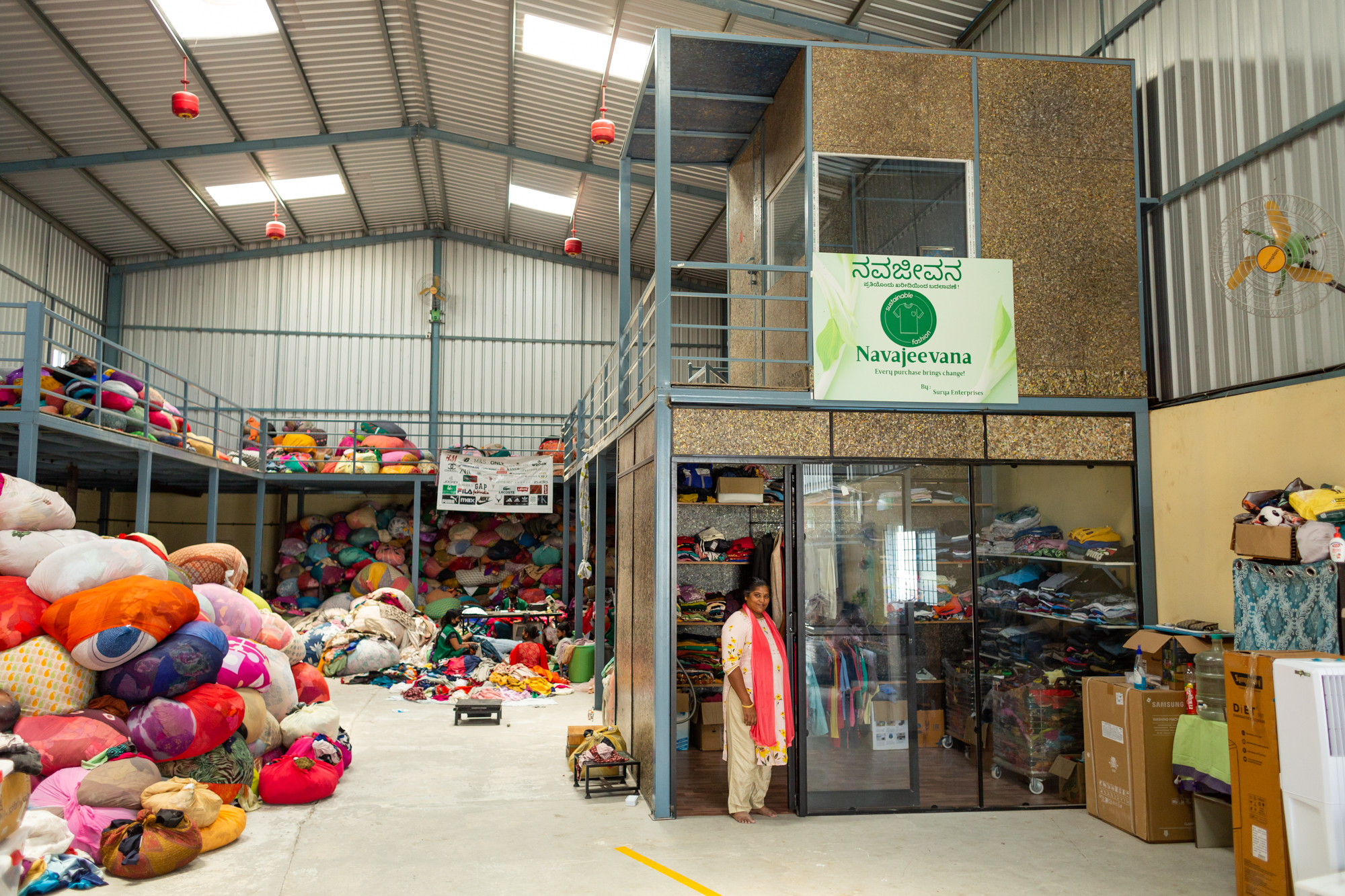
Beyond textile recovery, the TRF demonstrates what becomes possible when waste picker communities are equipped with the infrastructure, skills and opportunities to lead. Combining entrepreneurship, safe working conditions and circular innovation, the facility offers a glimpse of a more inclusive future for Bengaluru's textile economy.
As part of the Saamuhika Shakti project, our implementing partners—Circular Apparel Innovation Factory (CAIF), Enviu, Hasiru Dala, and Sambhav Foundation—work collaboratively to create a value chain for post-consumer textile waste in Bengaluru. This initiative not only enables livelihood opportunities for waste pickers but also contributes to positive environmental outcomes.
You can drop off your textile waste at one of the 16 Dry Waste Collection Centre (DWCC) nearest to you or at the Textile Recovery Facility (TRF) in Hirandahalli. Click here for the map and more information.
How one waste picker built a circular textile enterprise that creates opportunity for herself, her community and the circular economy.
When the Textile Recovery Facility (TRF) in Hirandahalli, Bengaluru, opened its doors in August 2024, it was built on a simple but ambitious vision: to create an inclusive circular textile waste management business that generates livelihoods for waste picker communities while reducing the environmental burden of textile waste. Started by waste picker turned entrepreneur Indumati with support from Circular Apparel Innovation Factory (CAIF), an Intellecap initiative, and Hasiru Dala, the facility sits at the heart of a growing effort to recover value from post-consumer textiles while generating assured livelihood opportunities for waste pickers working at the frontlines of waste management. Two years on, the TRF has evolved into much more than a sorting centre. It has become a hub for innovation, enterprise and community leadership, demonstrating how circular systems can create both environmental and economic impact.
Photos by: Vinod Sebastian
From the outside, the TRF resembles a modest industrial warehouse. Inside, however, thousands of kilograms of discarded textiles pass through every month, beginning a carefully managed journey away from landfills and back into the circular economy.
At the centre of the operation is Indumathi, a waste picker turned entrepreneur whose leadership reflects the core philosophy of the model: placing waste picker communities at the forefront of decision-making and enterprise.
Textiles collected through Dry Waste Collection Centres, institutional, individual and community collection drives across Bengaluru are aggregated at the facility, creating the volumes needed to unlock new market opportunities and recovery pathways.
Every item that enters the facility is assessed by trained workers and sorted according to type, quality, colour and condition. This careful process determines where each textile will ultimately be directed within the value chain. What appears to be a mountain of discarded clothing is, in reality, a collection of opportunities. Some textiles are suitable for resale, others for recycling or upcycling, while materials with limited reuse potential are channelled into alternative applications.
The facility uses Matoha, a textile identification device that helps determine fibre blends and material composition. By improving sorting accuracy, it enables better market matching and higher value recovery.
The facility uses Matoha, a textile identification device that helps determine fibre blends and material composition. By improving sorting accuracy, it enables better market matching and higher value recovery.
A dedicated refurbishment unit allows garments to be repaired and restored before re-entering the market. In doing so, the facility prioritises reuse before recycling, helping extend the life of valuable materials.
Clothing in good condition is displayed at Navajeevana, the thrift store housed within the TRF. From here, garments are sold directly to customers or through pop-up thrift events organised across the city.
Beyond textile recovery, the TRF demonstrates what becomes possible when waste picker communities are equipped with the infrastructure, skills and opportunities to lead. Combining entrepreneurship, safe working conditions and circular innovation, the facility offers a glimpse of a more inclusive future for Bengaluru's textile economy.
As part of the Saamuhika Shakti project, our implementing partners—Circular Apparel Innovation Factory (CAIF), Enviu, Hasiru Dala, and Sambhav Foundation—work collaboratively to create a value chain for post-consumer textile waste in Bengaluru. This initiative not only enables livelihood opportunities for waste pickers but also contributes to positive environmental outcomes.
You can drop off your textile waste at one of the 16 Dry Waste Collection Centre (DWCC) nearest to you or at the Textile Recovery Facility (TRF) in Hirandahalli. Click here for the map and more information.


