
A photograph can be more than an image. For children growing up in waste-picking communities, it can become a way to observe their surroundings, make sense of everyday experiences and share what often goes unseen.
In 2025, 33 children from Bengaluru’s waste-picking communities participated in a one-day Photojournalism Experiential Learning Training facilitated by photographer and videographer Bharat, through Sparsha Trust as part of the Saamuhika Shakti initiative. The training introduced them to photography and visual storytelling, encouraging them to look closely at their homes, neighbourhoods, work, people and natural surroundings.
Five children later had their photographs selected for a photojournalism exhibition at Rangoli Art Centre on MG Road, Bengaluru. For some, the experience opened up a new interest and confidence in their creative abilities. Today, three children are continuing this journey through photojournalism internships, gaining practical experience in photography, documentation and storytelling. These photographs offer a glimpse into their communities as they see them — with honesty, curiosity, familiarity and possibility.
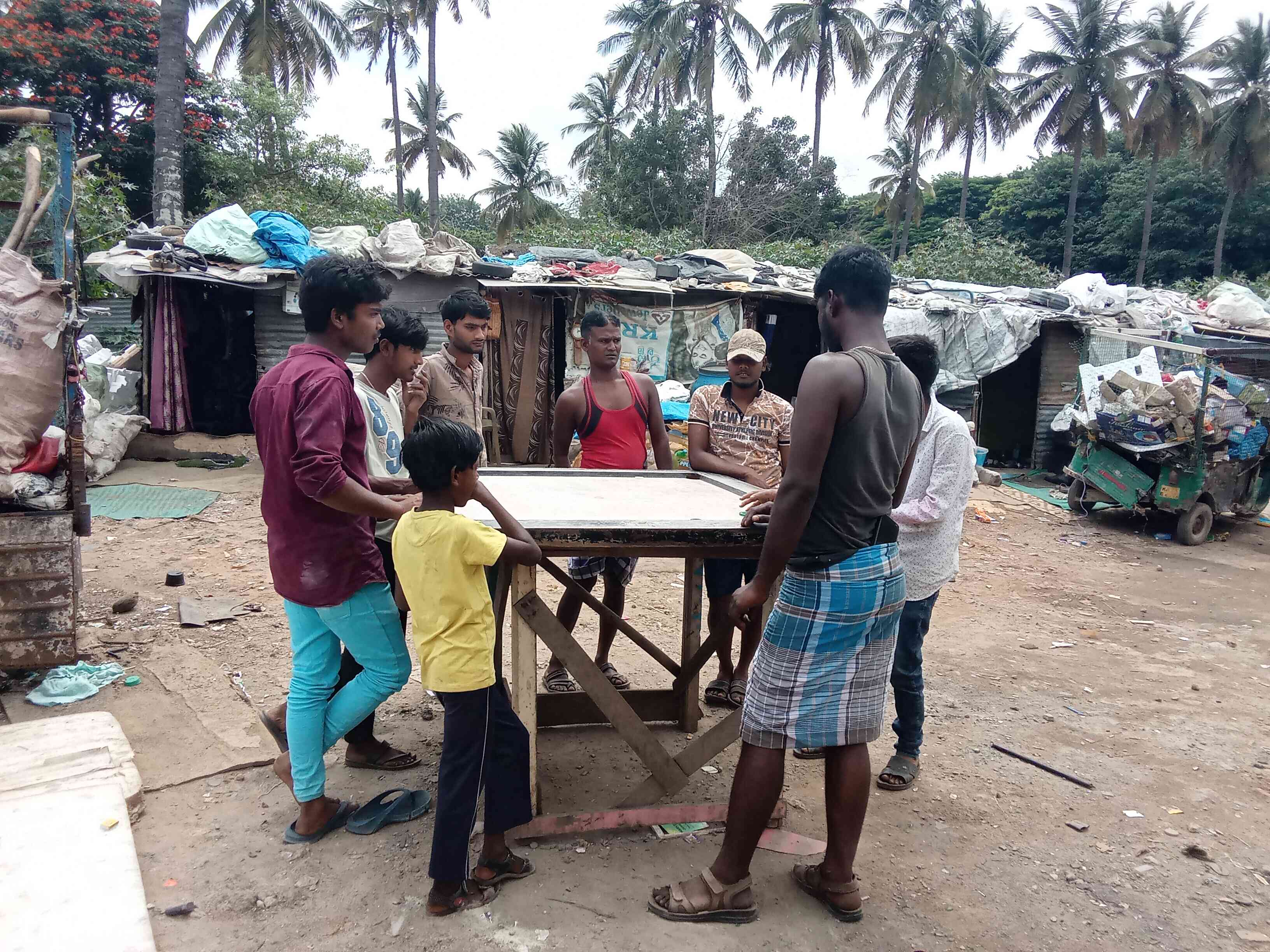
In Chiranjeevi Layout 2, limited space does not limit children's capacity for play. Broken and discarded materials become objects of imagination as children create their own indoor games. For Ashok, who once dropped out of school in Class 9 and described having lost direction, learning to observe such everyday moments became part of discovering a different way of looking at the world. His camera captures not only how children find joy with what is available but also how creativity can emerge from ordinary surroundings.
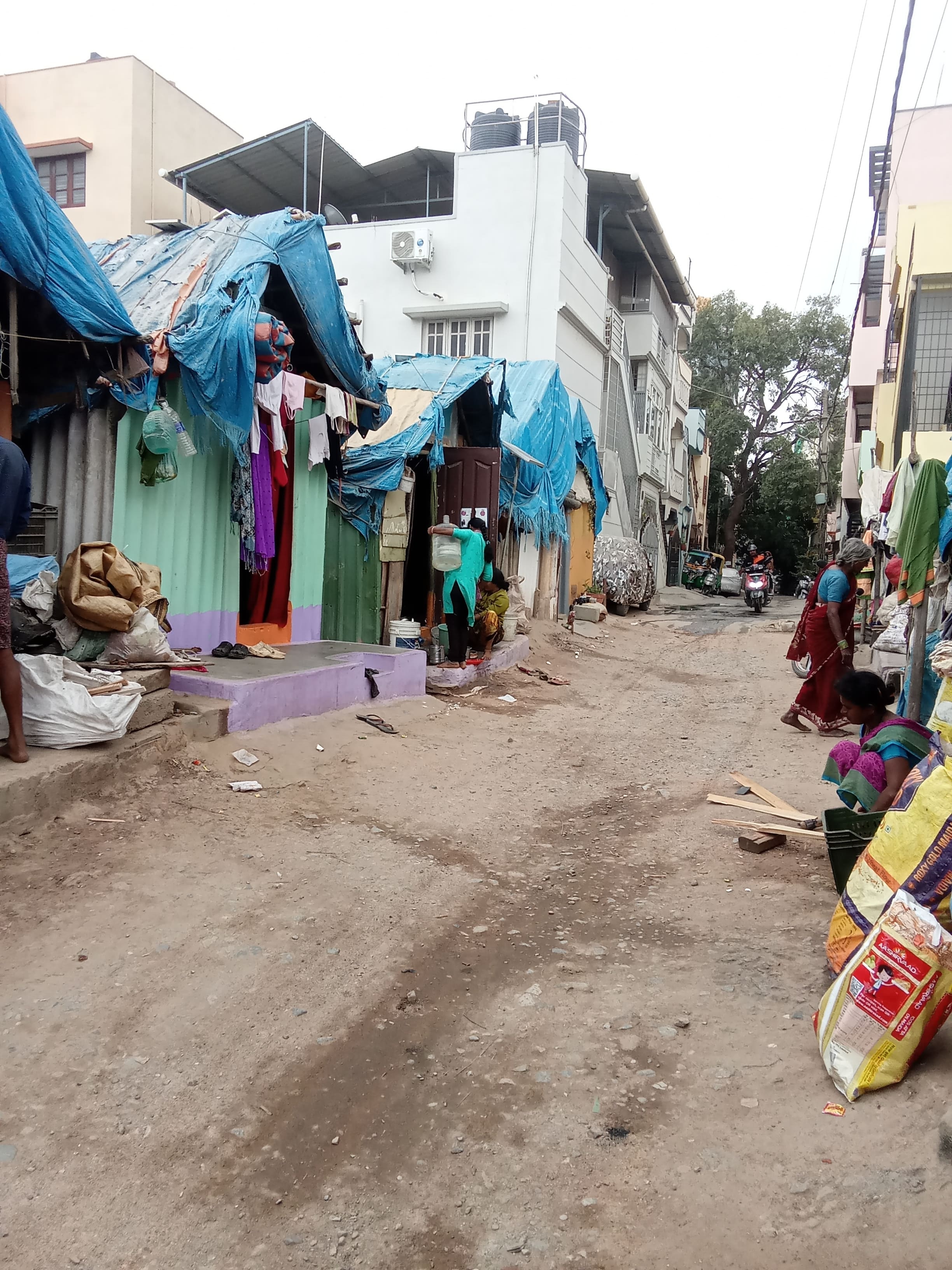
A cluster of small homes in Munneshwara Nagar brings another aspect of community life into view. The closely placed structures point to the gaps in safety, security and basic infrastructure that shape everyday living conditions. Ashok's photograph invites attention to these realities without looking away from the people who make these spaces their homes. His own journey reflects how opportunities to learn and express oneself can create room to recognise possibilities beyond the circumstances immediately around them.
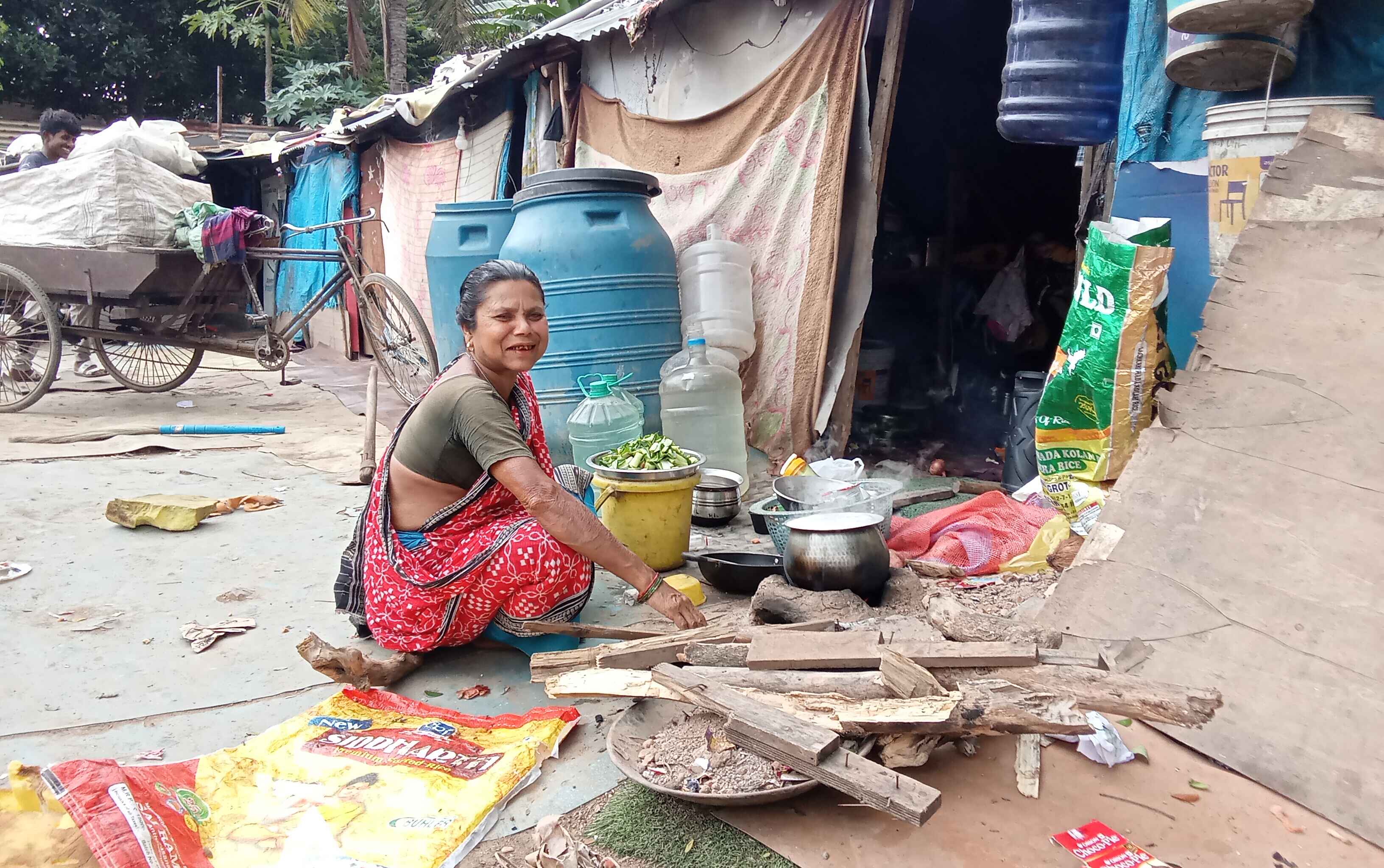
Outside a modest shelter in Chiranjeevi Layout 2, a woman prepares a meal. It is a quiet, everyday moment, yet Divya's photograph gives it space and visibility. Rather than looking for an extraordinary scene, she turns her lens towards an experience familiar to families in the community — cooking, working and carrying on with daily life. Through such observations, the children began to document their surroundings from within, bringing familiarity and lived experience into their storytelling.
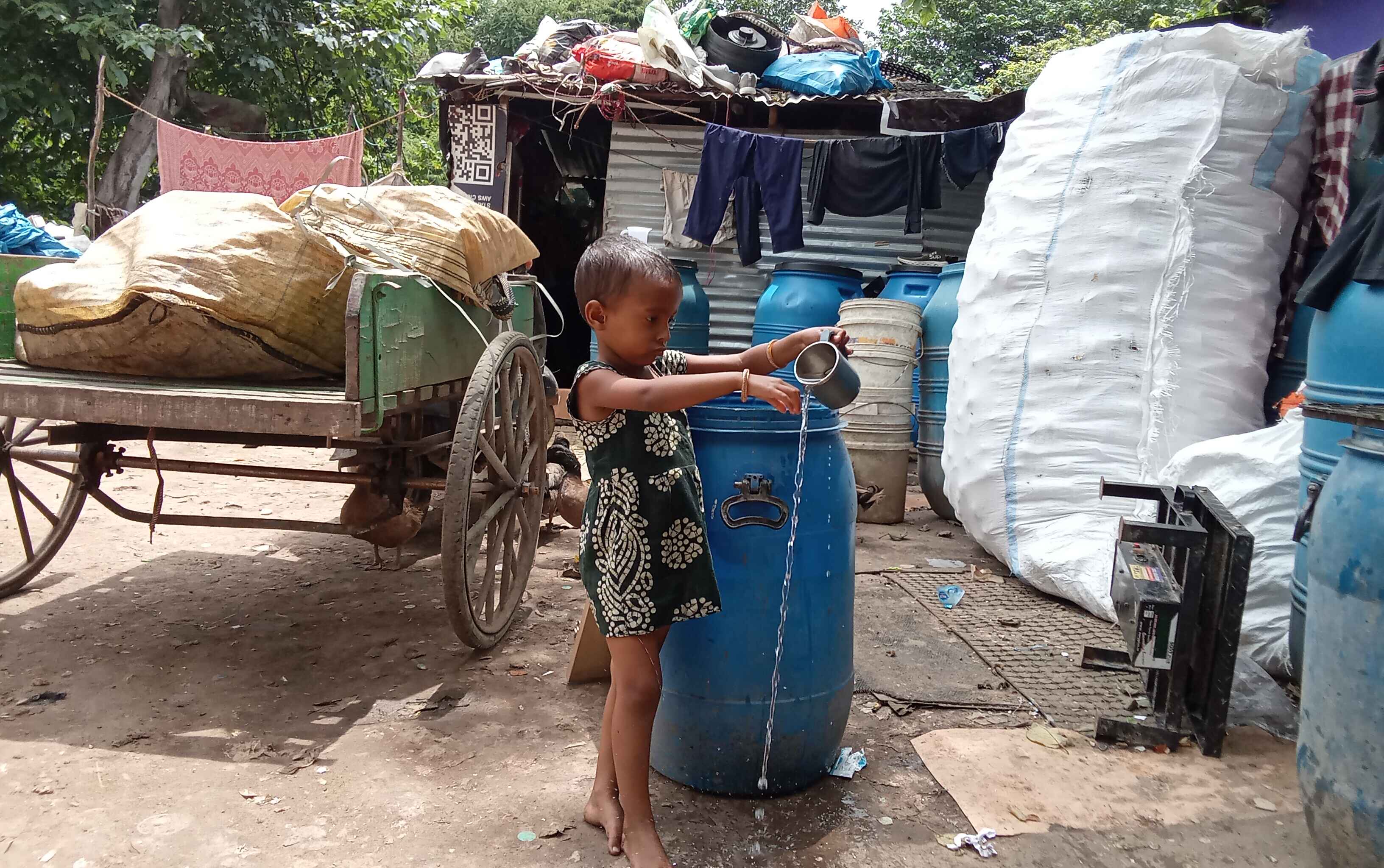
A young child pours water from a metal cup into a large drum, absorbed in the simple act. In Bande Colony, Divya notices a moment of quiet independence and playfulness in an otherwise ordinary routine. The photograph reflects the children's growing ability to find stories in small details — a skill at the heart of visual storytelling. For them, photography was not simply about taking pictures but about slowing down, noticing and deciding what was worth sharing.
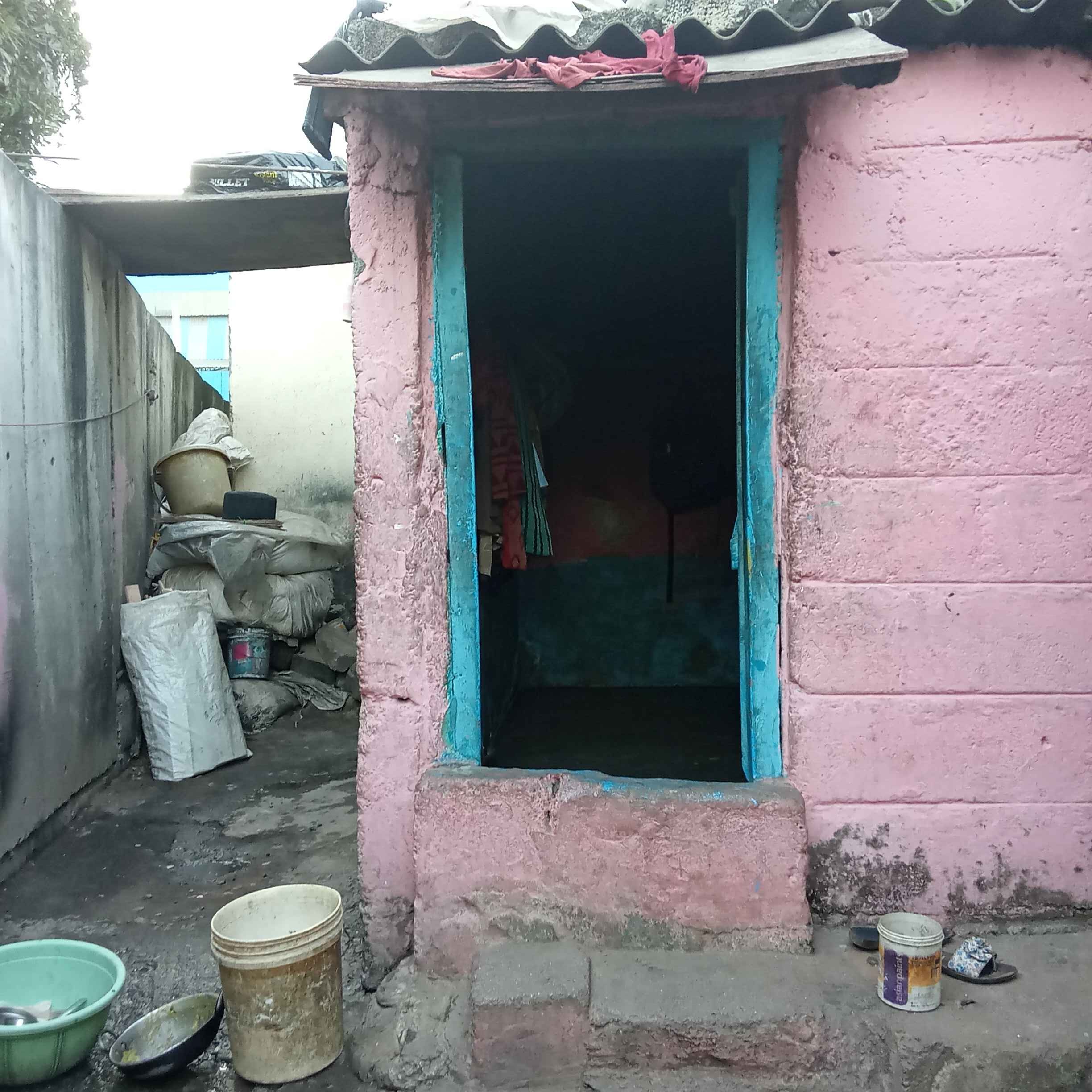
A narrow lane winds between closely built homes in Siddaratha Colony, with bags, containers, clothes and household objects occupying whatever space is available. People move through the passage as the neighbourhood continues its daily rhythm. Mallikarjun's photograph documents how families adapt their homes and surroundings to make space for everyday life. His attention to these details shows how the children were learning to look beyond a single subject and capture the wider environment in which people live.
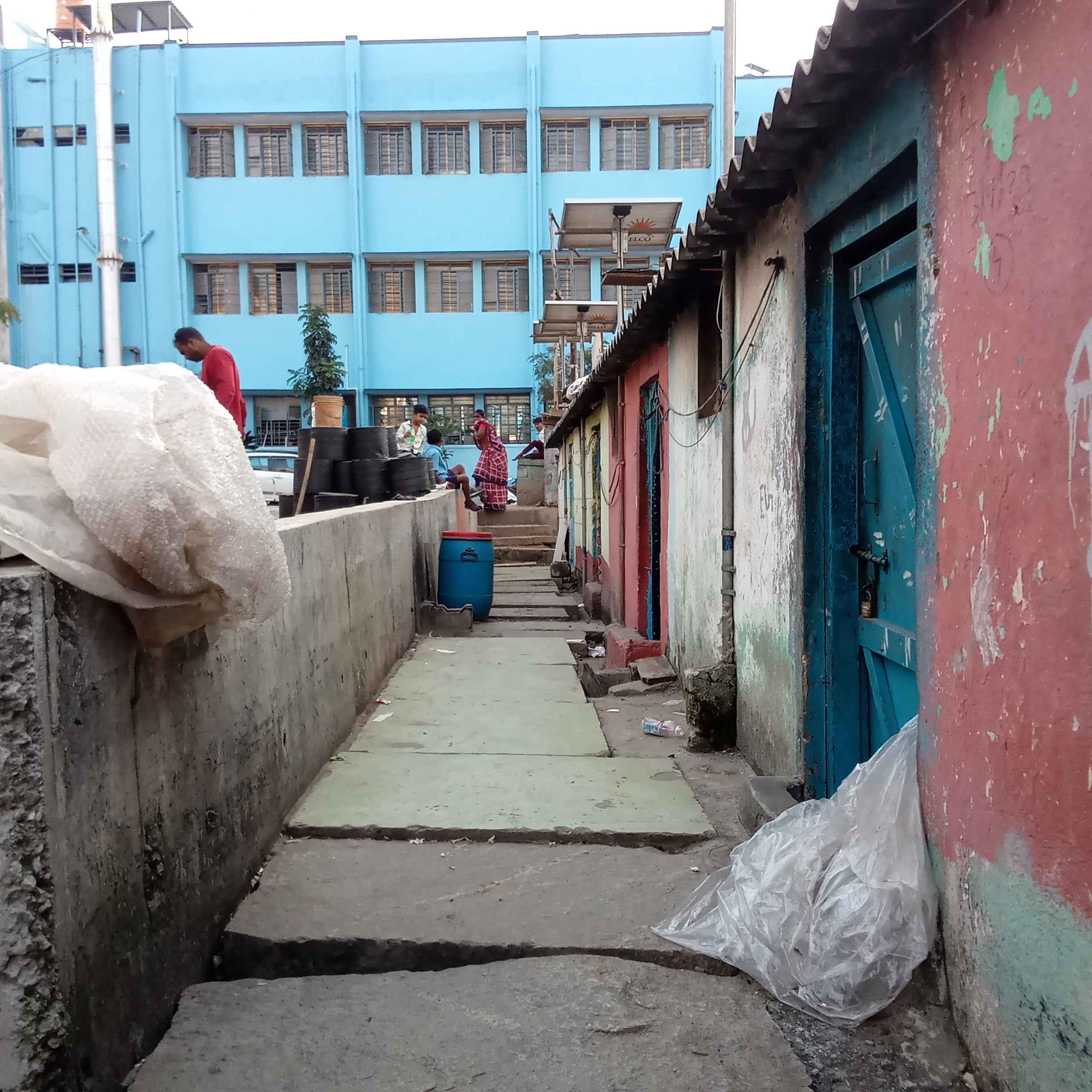
Rows of small homes with colourful doors stand beside a walkway, while a large blue school building rises in the background. Community members go about their routines in the space between them. The image brings together two important parts of children's lives — the places they call home and the institutions that can open pathways to learning. For children like Ashoka, who returned to education through a Community-Based Centre after dropping out of school, access to learning became an important part of finding direction again.
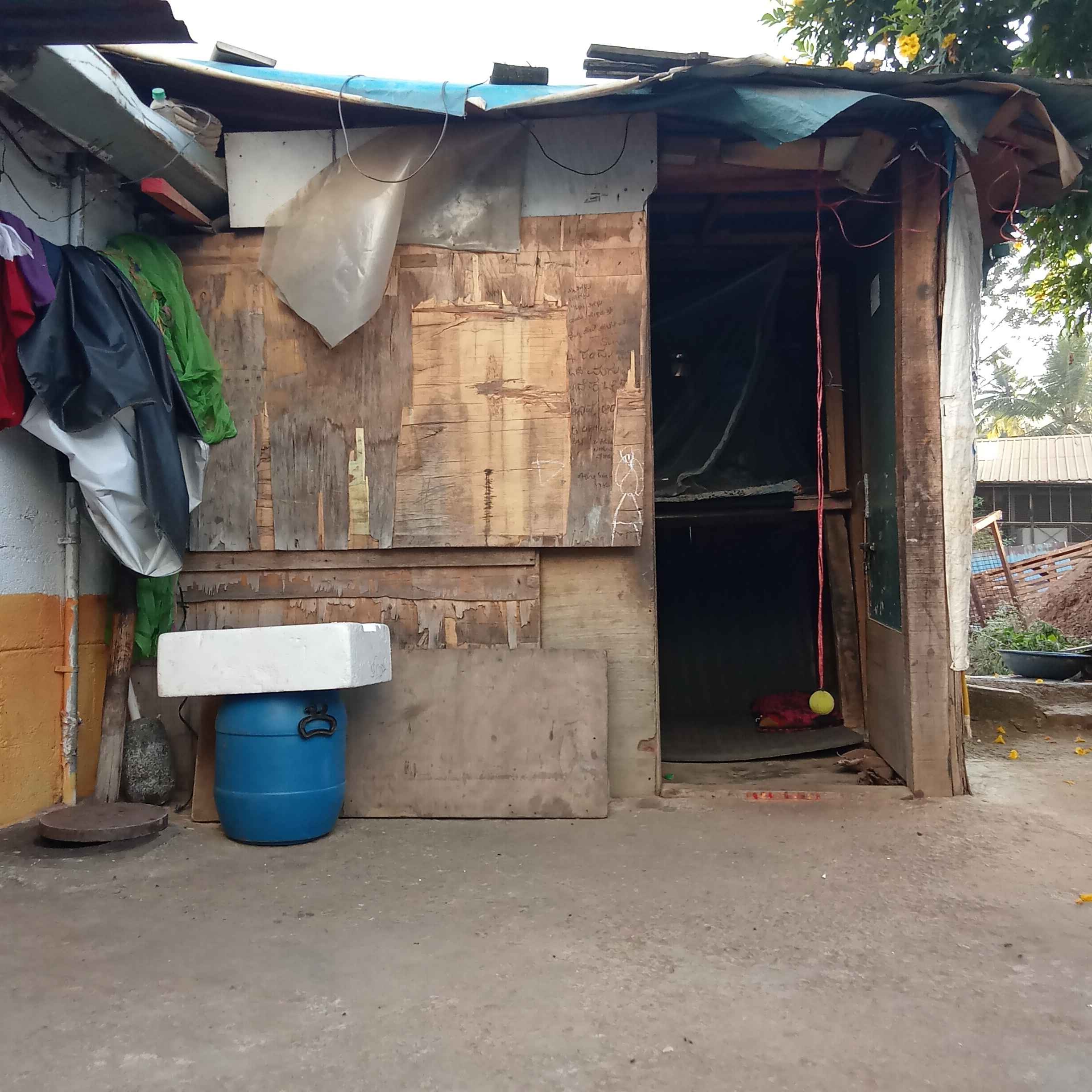
Built from reused wood, plastic and tin sheets, the dwelling in Mallikarjun's photograph reflects both difficult living conditions and the resourcefulness required to make a home from available materials. The children were encouraged to document their surroundings as they experienced them, including realities that may otherwise remain unseen. In doing so, their photographs become records of the ingenuity, challenges and everyday lives within their communities.
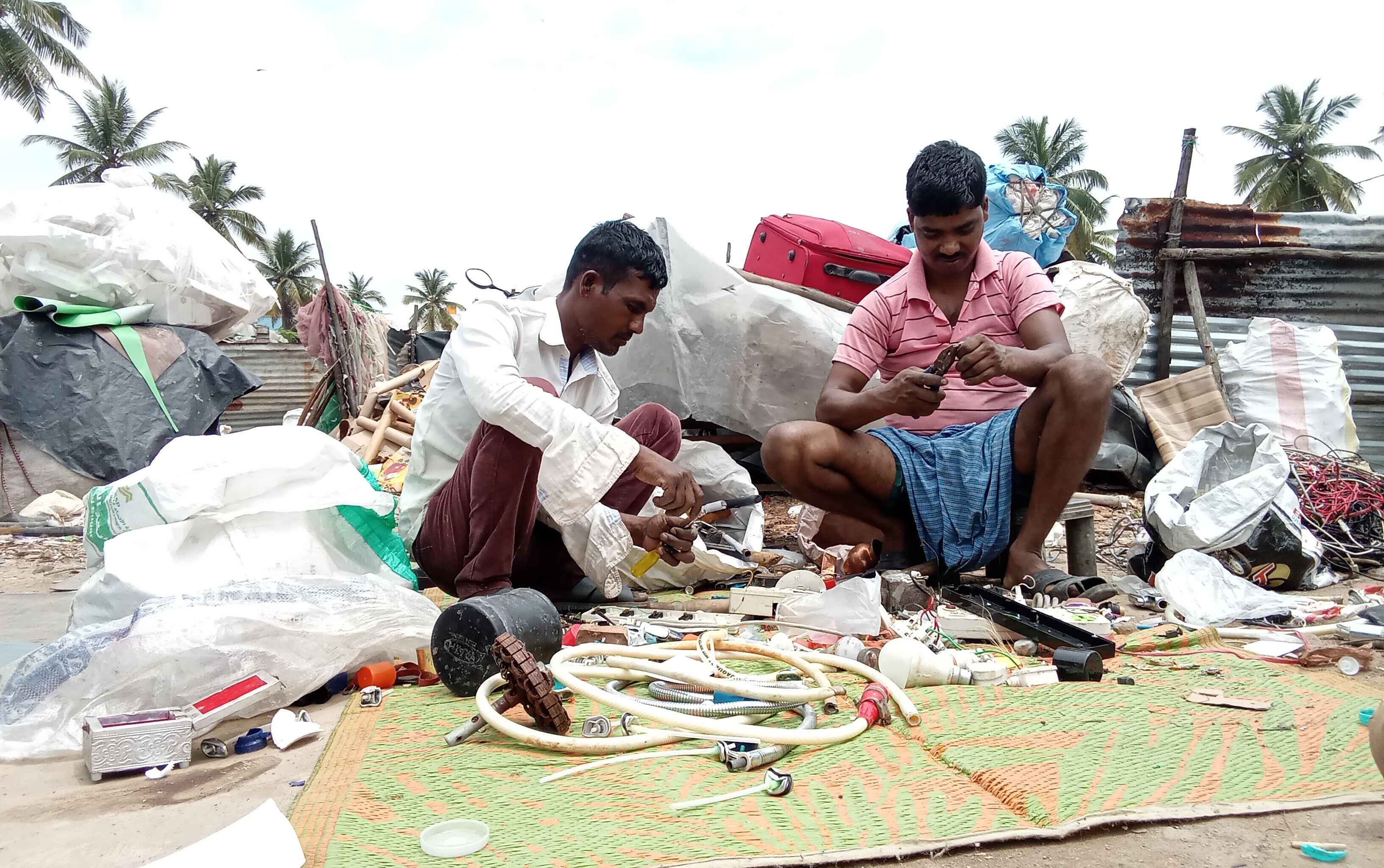
Waste segregation and collection are part of the daily rhythm of waste-picking communities. Ravichandran's photograph turns his attention to this work, documenting the process and the environment in which it takes place. By choosing to photograph the work around him, he offers a perspective rooted in familiarity — one that recognises the labour behind the materials that move through the city. The camera becomes a means of documenting work that is essential yet often overlooked.
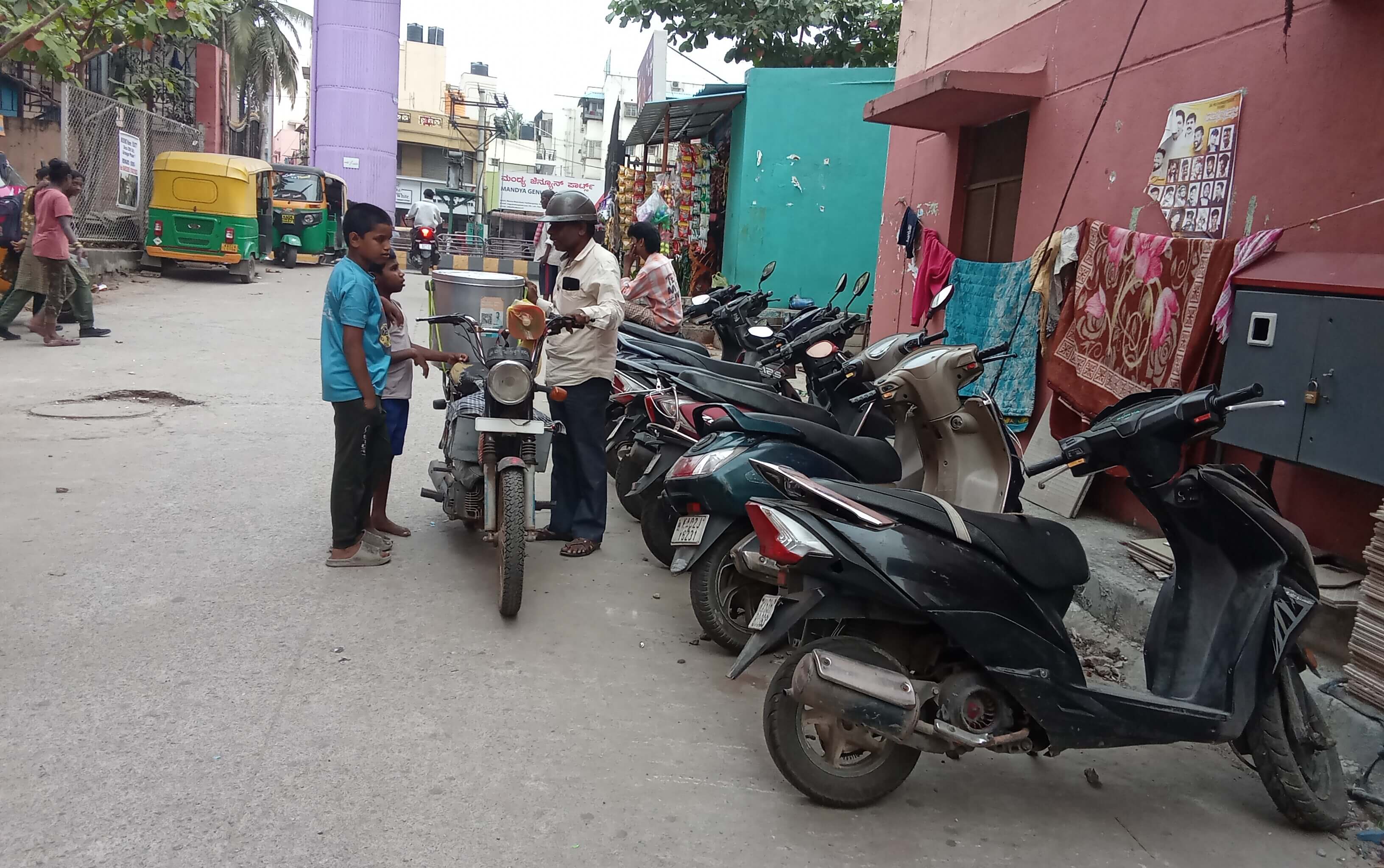
A narrow road in Chamundeshwari Nagar brings together a bike, an auto, children and a local vendor in one lively frame. There is no single focal point; instead, the photograph captures the movement and interactions that make up an ordinary day. Ravichandran's image reflects the observational approach encouraged through the training — recognising that a community's story can be found not only in individual people or events but also in the everyday relationships between them.
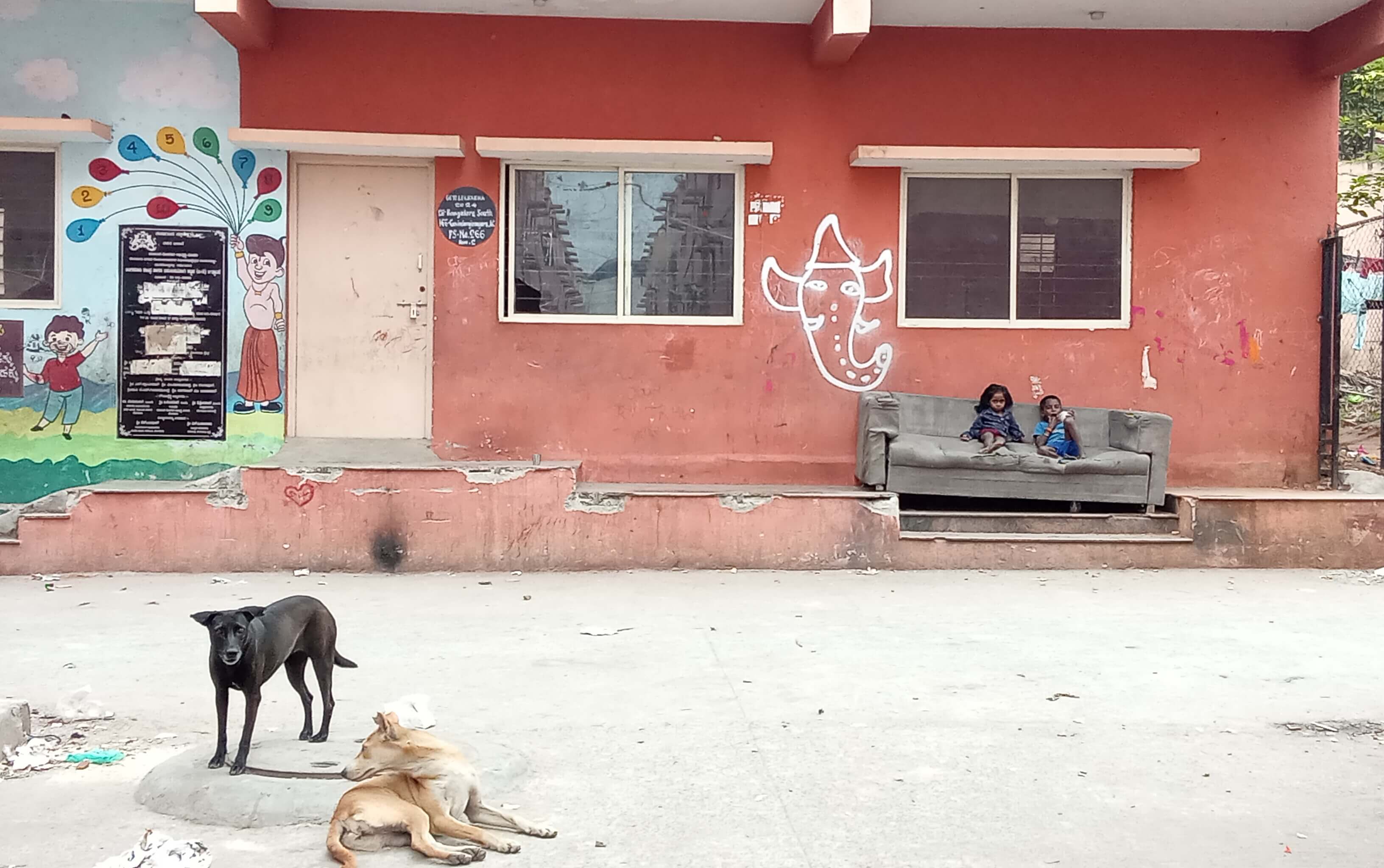
The Anganwadi centre in Panthrapalya offers a different view of community life — a shared space where young children come together for early learning, nutrition and care. By photographing the centre, Ravichandran captures an institution embedded in the everyday lives of families. Together with images of homes, work, streets and play, the photograph adds another layer to the children's documentation of their surroundings, showing the range of spaces that shape childhood within their communities.
.jpg)
Children playing in Chiranjeevi Layout 2 fill Sharanabasava's frame with movement and energy. At nine years old, Sharanabasava began exploring photography through the Photojournalism Training supported by Sparsha Trust. With access to a tablet for three months, he photographed people, work, nature and everyday life around him. For his mother Bhimabai, the experience was significant not only because of the photographs he produced but because she saw his confidence grow as he found a way to express what he observed.
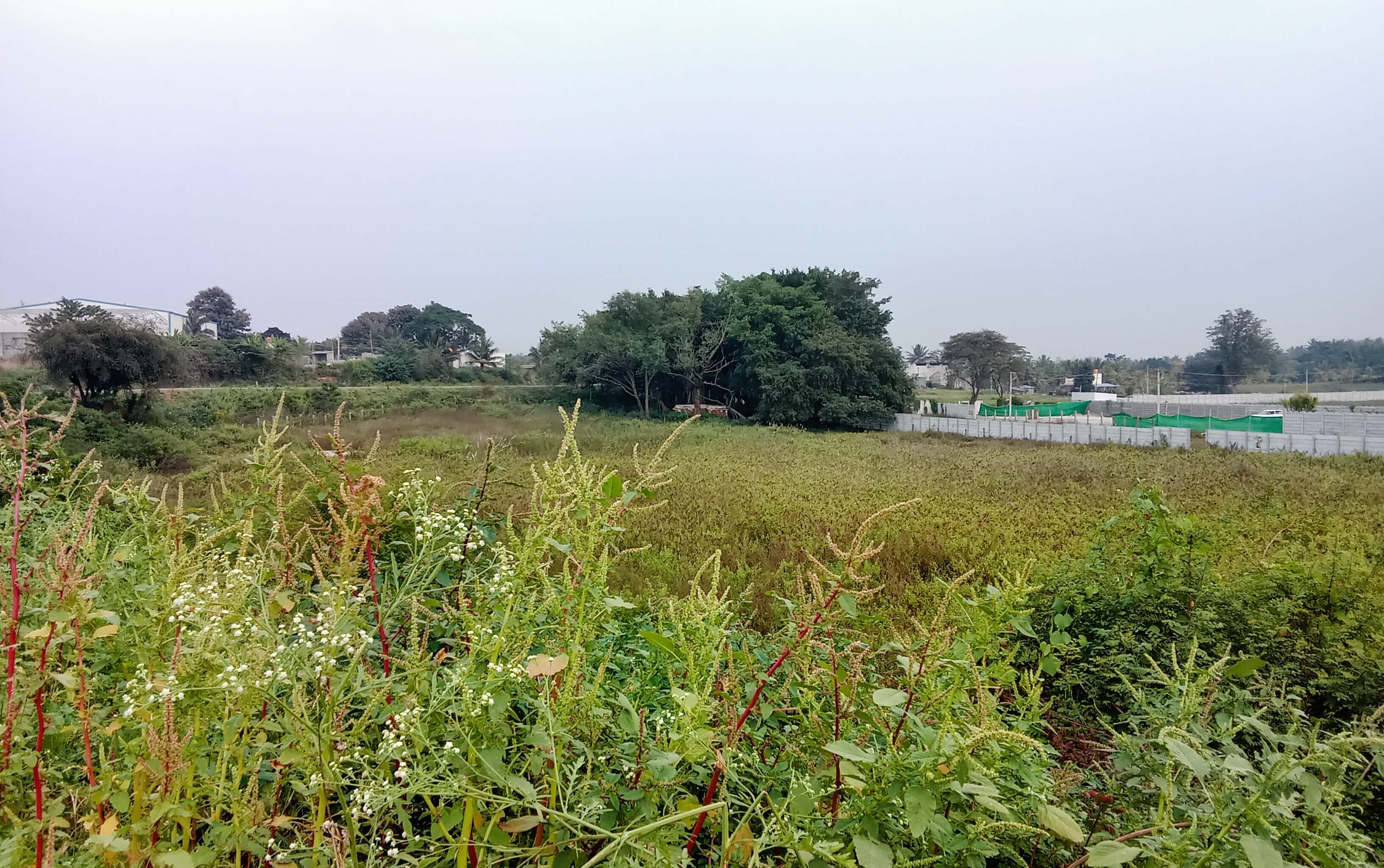
In Yelachaguppe, Sharanabasava turns his camera towards nature, finding quiet beauty in the surroundings of his community. His photograph marks the wider possibilities of looking closely at the world — from the realities of housing and work to moments of play and the calm of the natural environment. His journey, like that of other children in the programme, demonstrates how a creative opportunity can become a pathway to confidence and expression.
What began as an introduction to photography has since grown into a space for confidence, expression and possibility. Through their lenses, these children are learning to observe their surroundings, tell stories from their own perspectives and recognise the value of their voices. For Sharanabasava, it sparked an interest in photography; for Ashoka, it became part of a journey back to education and towards new opportunities.
A camera has become more than a tool for capturing images — it has become a means for children to see, share and shape their own stories.
A photograph can be more than an image. For children growing up in waste-picking communities, it can become a way to observe their surroundings, make sense of everyday experiences and share what often goes unseen.
In 2025, 33 children from Bengaluru’s waste-picking communities participated in a one-day Photojournalism Experiential Learning Training facilitated by photographer and videographer Bharat, through Sparsha Trust as part of the Saamuhika Shakti initiative. The training introduced them to photography and visual storytelling, encouraging them to look closely at their homes, neighbourhoods, work, people and natural surroundings.
Five children later had their photographs selected for a photojournalism exhibition at Rangoli Art Centre on MG Road, Bengaluru. For some, the experience opened up a new interest and confidence in their creative abilities. Today, three children are continuing this journey through photojournalism internships, gaining practical experience in photography, documentation and storytelling. These photographs offer a glimpse into their communities as they see them — with honesty, curiosity, familiarity and possibility.
In Chiranjeevi Layout 2, limited space does not limit children's capacity for play. Broken and discarded materials become objects of imagination as children create their own indoor games. For Ashok, who once dropped out of school in Class 9 and described having lost direction, learning to observe such everyday moments became part of discovering a different way of looking at the world. His camera captures not only how children find joy with what is available but also how creativity can emerge from ordinary surroundings.
A cluster of small homes in Munneshwara Nagar brings another aspect of community life into view. The closely placed structures point to the gaps in safety, security and basic infrastructure that shape everyday living conditions. Ashok's photograph invites attention to these realities without looking away from the people who make these spaces their homes. His own journey reflects how opportunities to learn and express oneself can create room to recognise possibilities beyond the circumstances immediately around them.
Outside a modest shelter in Chiranjeevi Layout 2, a woman prepares a meal. It is a quiet, everyday moment, yet Divya's photograph gives it space and visibility. Rather than looking for an extraordinary scene, she turns her lens towards an experience familiar to families in the community — cooking, working and carrying on with daily life. Through such observations, the children began to document their surroundings from within, bringing familiarity and lived experience into their storytelling.
A young child pours water from a metal cup into a large drum, absorbed in the simple act. In Bande Colony, Divya notices a moment of quiet independence and playfulness in an otherwise ordinary routine. The photograph reflects the children's growing ability to find stories in small details — a skill at the heart of visual storytelling. For them, photography was not simply about taking pictures but about slowing down, noticing and deciding what was worth sharing.
A narrow lane winds between closely built homes in Siddaratha Colony, with bags, containers, clothes and household objects occupying whatever space is available. People move through the passage as the neighbourhood continues its daily rhythm. Mallikarjun's photograph documents how families adapt their homes and surroundings to make space for everyday life. His attention to these details shows how the children were learning to look beyond a single subject and capture the wider environment in which people live.
Rows of small homes with colourful doors stand beside a walkway, while a large blue school building rises in the background. Community members go about their routines in the space between them. The image brings together two important parts of children's lives — the places they call home and the institutions that can open pathways to learning. For children like Ashoka, who returned to education through a Community-Based Centre after dropping out of school, access to learning became an important part of finding direction again.
Built from reused wood, plastic and tin sheets, the dwelling in Mallikarjun's photograph reflects both difficult living conditions and the resourcefulness required to make a home from available materials. The children were encouraged to document their surroundings as they experienced them, including realities that may otherwise remain unseen. In doing so, their photographs become records of the ingenuity, challenges and everyday lives within their communities.
Waste segregation and collection are part of the daily rhythm of waste-picking communities. Ravichandran's photograph turns his attention to this work, documenting the process and the environment in which it takes place. By choosing to photograph the work around him, he offers a perspective rooted in familiarity — one that recognises the labour behind the materials that move through the city. The camera becomes a means of documenting work that is essential yet often overlooked.
A narrow road in Chamundeshwari Nagar brings together a bike, an auto, children and a local vendor in one lively frame. There is no single focal point; instead, the photograph captures the movement and interactions that make up an ordinary day. Ravichandran's image reflects the observational approach encouraged through the training — recognising that a community's story can be found not only in individual people or events but also in the everyday relationships between them.
The Anganwadi centre in Panthrapalya offers a different view of community life — a shared space where young children come together for early learning, nutrition and care. By photographing the centre, Ravichandran captures an institution embedded in the everyday lives of families. Together with images of homes, work, streets and play, the photograph adds another layer to the children's documentation of their surroundings, showing the range of spaces that shape childhood within their communities.
Children playing in Chiranjeevi Layout 2 fill Sharanabasava's frame with movement and energy. At nine years old, Sharanabasava began exploring photography through the Photojournalism Training supported by Sparsha Trust. With access to a tablet for three months, he photographed people, work, nature and everyday life around him. For his mother Bhimabai, the experience was significant not only because of the photographs he produced but because she saw his confidence grow as he found a way to express what he observed.
In Yelachaguppe, Sharanabasava turns his camera towards nature, finding quiet beauty in the surroundings of his community. His photograph marks the wider possibilities of looking closely at the world — from the realities of housing and work to moments of play and the calm of the natural environment. His journey, like that of other children in the programme, demonstrates how a creative opportunity can become a pathway to confidence and expression.
What began as an introduction to photography has since grown into a space for confidence, expression and possibility. Through their lenses, these children are learning to observe their surroundings, tell stories from their own perspectives and recognise the value of their voices. For Sharanabasava, it sparked an interest in photography; for Ashoka, it became part of a journey back to education and towards new opportunities.
A camera has become more than a tool for capturing images — it has become a means for children to see, share and shape their own stories.


