
Nidhi Kalagarla, Senior Analyst, Social Alpha
In India's bustling towns and cities, waste pickers form an invisible backbone of the waste management system. Every day, they collect, sort and recover materials that might otherwise end up in landfills, quietly contributing to the circular economy. Yet, despite the significance of their work, waste pickers continue to face unsafe working conditions, uncertain incomes and social stigma. Their contribution to the circular economy is significant, but the recognition, security and dignity that should come with it are often missing.
This raises an important question: What would it take to enable more dignified livelihoods for waste pickers?
Social Alpha bridges the gap between science and society and believes that circular economy innovations can scale only when technology and inclusion are de-risked together. A cleaner alternative that reaches commercial viability without creating dignified livelihoods is only half a solution. The Techtonic: Innovations for a Circular Economy programme, jointly developed by Social Alpha and H&M Foundation as part of Saamuhika Shakti, was designed to explore this question.
The programme was built around the hypothesis that a start-up solving environmental challenges related to waste could also create meaningful livelihood opportunities for people from waste picker communities, helping them move into more stable and formal employment.
Between 2020 and 2023, the first phase of the programme supported nine start-ups working across different parts of the waste management ecosystem. Together, these start-ups diverted approximately 4,000 tonnes of waste, avoided 2,400 tonnes of CO₂ emissions and provided formal employment to 41 informal waste pickers.
Phase 1 revealed something important: inclusion outcomes were strongest where start-ups had structured support to hire, train and retain people from the community, and weakest where founders were left to figure it out alone.
In 2024, Phase 2 of the programme expanded its scope of inclusion, encouraging start-ups to create opportunities not only for waste pickers but also for their family members. So far, the start-ups have diverted more than 2,000 tonnes of waste from landfills, avoided more than 2,600 tonnes of CO₂ emissions and provided formal employment to 36 individuals from waste picker and underserved communities, with outcomes continuing to grow as the start-ups scale.
For most early-stage founders, the intent to hire inclusively is real, but the capacity to do so is often limited. They may struggle to reach out to communities, onboard workers with no formal-sector experience or design workplaces that support long-term retention.
The programme helped address these barriers by connecting start-ups with local partners already trusted by the community, so that hiring did not have to start from scratch. Grants helped absorb onboarding and training costs, reducing the need for founders to choose between inclusion and their available runway. The programme also encouraged fair wages and, where possible, benefits such as fixed working hours, social security, insurance, sanitation and safe working conditions.
While these impact numbers show environmental and employment outcomes, they tell only part of the story. A more important question is how these opportunities have influenced the lives of the people behind them.
What does dignity actually look like in the lives of former waste pickers?
Dignity cannot be captured through numbers alone. It becomes tangible in the changes that take place in everyday life: the confidence that comes from earning a regular income, the security of a formal job and the ability to learn new skills, make choices and support a family with greater confidence.
At Banofi, Tumpa Sardar, a former fabric scrap collector, moved from earning uncertain daily wages to her first formal job. She received hands-on training alongside a stable income. Regular earnings have brought her more than financial security. They have given her a greater sense of dignity and contributed to improvements in her family's everyday life.
Even meals at home reflect this progress. What was once a basic plate of dal-bhaat (lentils and rice) has become machh-bhaat (fish and rice) — a small but meaningful indication of how her family's circumstances have changed.
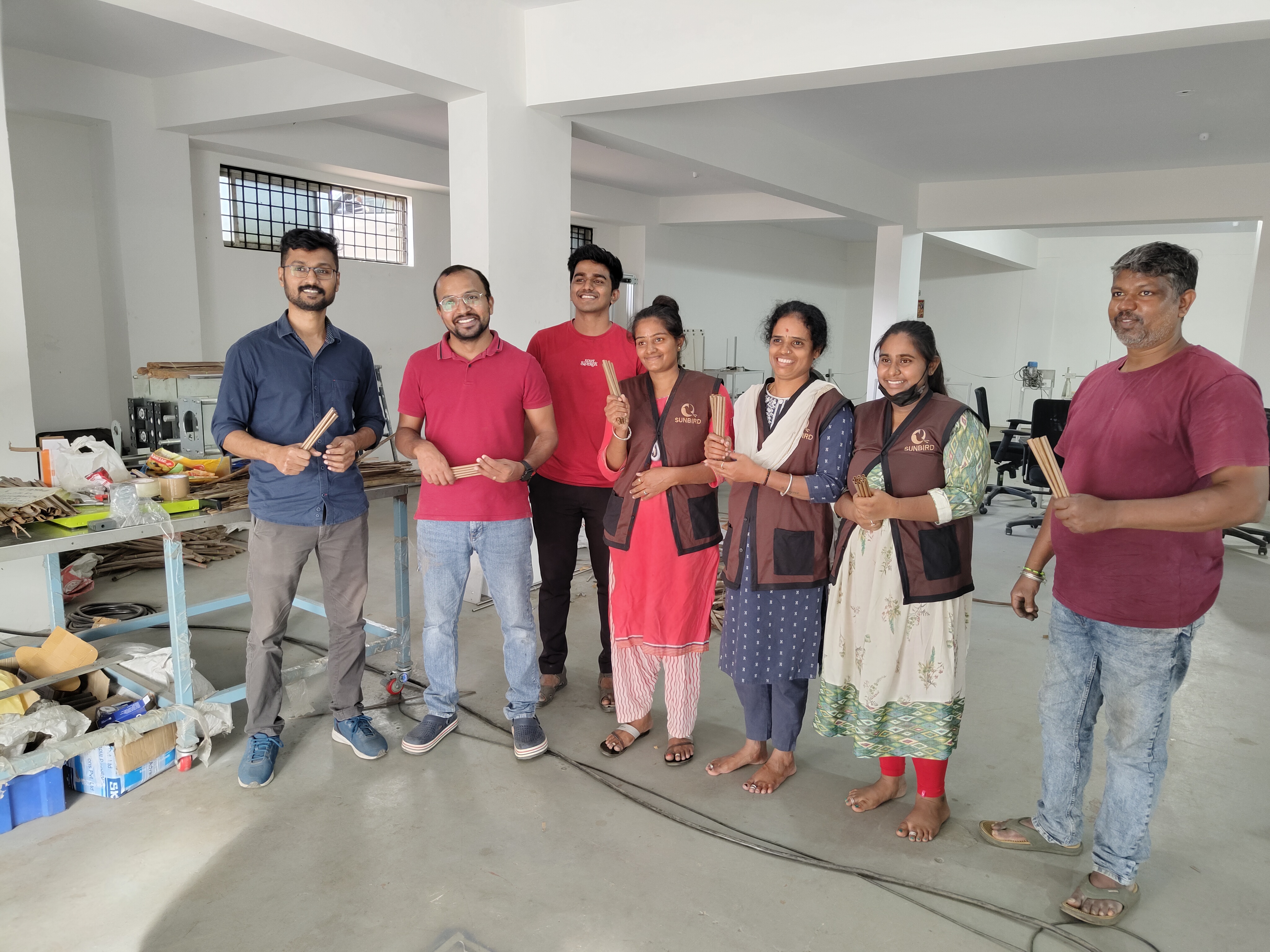
At Sunbird Straws, women who were previously engaged in uncertain and physically demanding work are now operating machines, conducting quality checks and managing packaging. For many, receiving a uniform and an employee ID card may seem like a simple change. For them, these can be symbols of belonging, recognition and being part of a formal workplace.
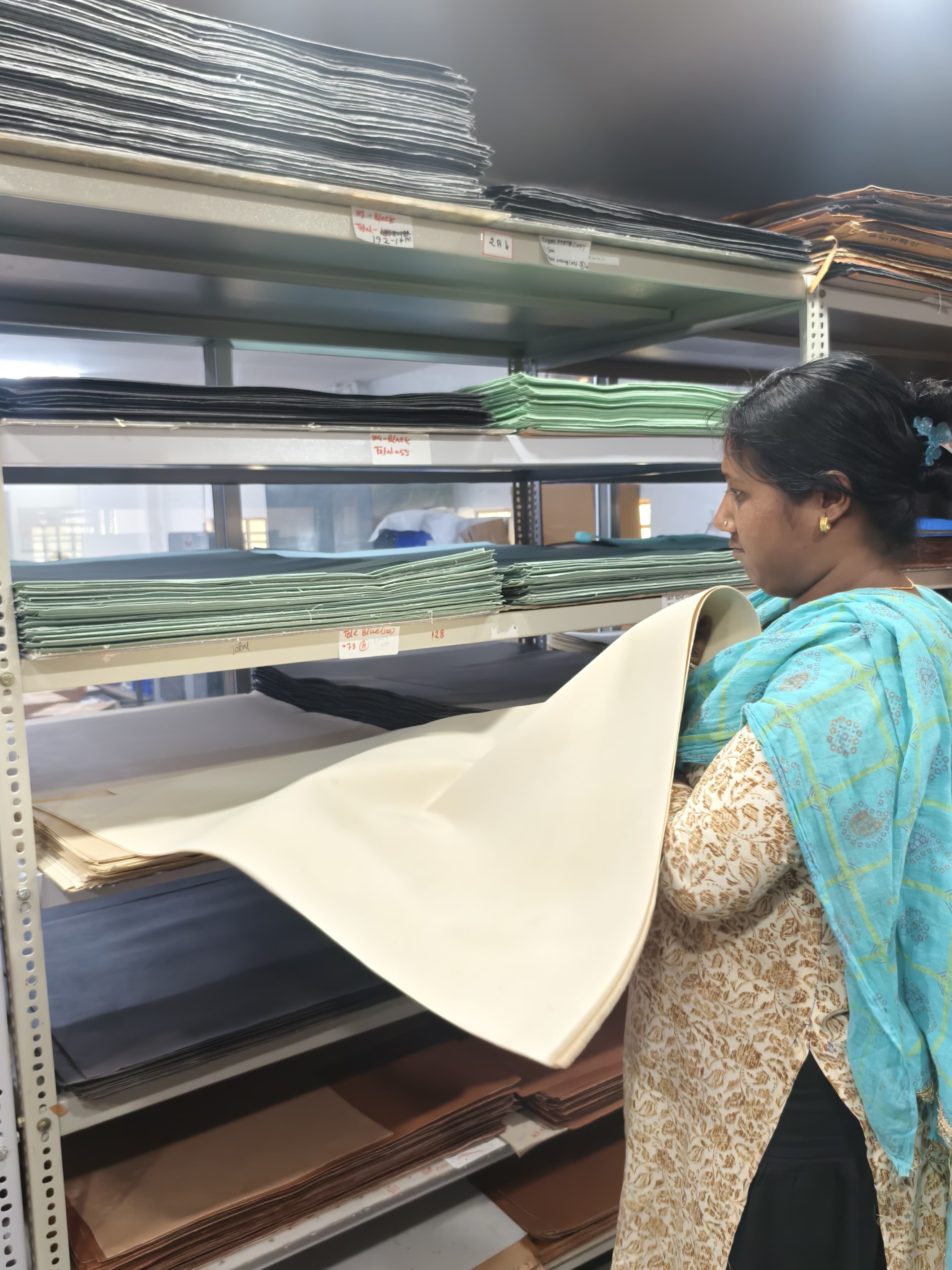
At KOSHA.ai, Sangeeta, who comes from a waste picker family, had little exposure to formal workplaces or the textile sector when she joined the company. She was trained to use FibreSENSE, an AI-powered device that identifies different types of textile fibres. Over time, she progressed from learning the basics to independently handling fabric samples and supporting pilot and customer demonstrations.
The experience also brought meaningful changes to her everyday life. As she began earning, Sangeeta developed greater awareness of saving and managing money. She also became more conscious of her health and wellbeing and gained confidence in navigating experiences she had not encountered before.
.jpg)
These stories show that inclusion goes beyond creating jobs. Employment can be a starting point, but its value also lies in what it enables: learning, growth, confidence and choice. It can help people build new skills, gain greater financial security and see possibilities that were previously out of reach.
Dignity also depends on where people work, not just whether they have work. A formal job is meaningful only when the workplace is safe and supportive.
Across the cohort, start-ups worked towards creating safer and more structured workplaces, including fixed working hours, social benefits, insurance and access to sanitation and drinking water. While these may seem like basic provisions, they can represent an important shift in how work is experienced and valued.
The transition from informal work to formal employment is therefore not simply about changing the nature of a person's job. It can also change their relationship with income, security, skills and the workplace itself.
The circular economy is often discussed in terms of how resources can be reduced, reused, recycled and recovered. But if systems are being rebuilt to value materials differently, there is also a need to rethink how the people who collect, sort, recover and transform those materials are valued.
The programme reinforced that innovation and inclusion can go hand in hand. A start-up, with the right support, can create formal employment. Formal employment can create opportunities to develop new skills. Skills can build confidence, and confidence can give people greater agency to chart their own paths rather than remain limited by the socio-economic conditions that have historically constrained their communities.
As start-ups continue to scale their solutions and create opportunities for underserved communities, the collective efforts of investors, policymakers, ecosystem partners and enterprises will be critical to amplifying their impact.
Social Alpha remains committed to enabling this journey and building a future where circular economy innovations create value not only for the planet but also for the people who have long been at the heart of it.
🎥 Watch the short film capturing how circularity startups are systematically de-risking the path to scale: Pilots to Impact: Circularity Start-ups in Action
Nidhi Kalagarla, Senior Analyst, Social Alpha
In India's bustling towns and cities, waste pickers form an invisible backbone of the waste management system. Every day, they collect, sort and recover materials that might otherwise end up in landfills, quietly contributing to the circular economy. Yet, despite the significance of their work, waste pickers continue to face unsafe working conditions, uncertain incomes and social stigma. Their contribution to the circular economy is significant, but the recognition, security and dignity that should come with it are often missing.
This raises an important question: What would it take to enable more dignified livelihoods for waste pickers?
Social Alpha bridges the gap between science and society and believes that circular economy innovations can scale only when technology and inclusion are de-risked together. A cleaner alternative that reaches commercial viability without creating dignified livelihoods is only half a solution. The Techtonic: Innovations for a Circular Economy programme, jointly developed by Social Alpha and H&M Foundation as part of Saamuhika Shakti, was designed to explore this question.
The programme was built around the hypothesis that a start-up solving environmental challenges related to waste could also create meaningful livelihood opportunities for people from waste picker communities, helping them move into more stable and formal employment.
Between 2020 and 2023, the first phase of the programme supported nine start-ups working across different parts of the waste management ecosystem. Together, these start-ups diverted approximately 4,000 tonnes of waste, avoided 2,400 tonnes of CO₂ emissions and provided formal employment to 41 informal waste pickers.
Phase 1 revealed something important: inclusion outcomes were strongest where start-ups had structured support to hire, train and retain people from the community, and weakest where founders were left to figure it out alone.
In 2024, Phase 2 of the programme expanded its scope of inclusion, encouraging start-ups to create opportunities not only for waste pickers but also for their family members. So far, the start-ups have diverted more than 2,000 tonnes of waste from landfills, avoided more than 2,600 tonnes of CO₂ emissions and provided formal employment to 36 individuals from waste picker and underserved communities, with outcomes continuing to grow as the start-ups scale.
For most early-stage founders, the intent to hire inclusively is real, but the capacity to do so is often limited. They may struggle to reach out to communities, onboard workers with no formal-sector experience or design workplaces that support long-term retention.
The programme helped address these barriers by connecting start-ups with local partners already trusted by the community, so that hiring did not have to start from scratch. Grants helped absorb onboarding and training costs, reducing the need for founders to choose between inclusion and their available runway. The programme also encouraged fair wages and, where possible, benefits such as fixed working hours, social security, insurance, sanitation and safe working conditions.
While these impact numbers show environmental and employment outcomes, they tell only part of the story. A more important question is how these opportunities have influenced the lives of the people behind them.
What does dignity actually look like in the lives of former waste pickers?
Dignity cannot be captured through numbers alone. It becomes tangible in the changes that take place in everyday life: the confidence that comes from earning a regular income, the security of a formal job and the ability to learn new skills, make choices and support a family with greater confidence.
At Banofi, Tumpa Sardar, a former fabric scrap collector, moved from earning uncertain daily wages to her first formal job. She received hands-on training alongside a stable income. Regular earnings have brought her more than financial security. They have given her a greater sense of dignity and contributed to improvements in her family's everyday life.
Even meals at home reflect this progress. What was once a basic plate of dal-bhaat (lentils and rice) has become machh-bhaat (fish and rice) — a small but meaningful indication of how her family's circumstances have changed.
At Sunbird Straws, women who were previously engaged in uncertain and physically demanding work are now operating machines, conducting quality checks and managing packaging. For many, receiving a uniform and an employee ID card may seem like a simple change. For them, these can be symbols of belonging, recognition and being part of a formal workplace.
At KOSHA.ai, Sangeeta, who comes from a waste picker family, had little exposure to formal workplaces or the textile sector when she joined the company. She was trained to use FibreSENSE, an AI-powered device that identifies different types of textile fibres. Over time, she progressed from learning the basics to independently handling fabric samples and supporting pilot and customer demonstrations.
The experience also brought meaningful changes to her everyday life. As she began earning, Sangeeta developed greater awareness of saving and managing money. She also became more conscious of her health and wellbeing and gained confidence in navigating experiences she had not encountered before.
These stories show that inclusion goes beyond creating jobs. Employment can be a starting point, but its value also lies in what it enables: learning, growth, confidence and choice. It can help people build new skills, gain greater financial security and see possibilities that were previously out of reach.
Dignity also depends on where people work, not just whether they have work. A formal job is meaningful only when the workplace is safe and supportive.
Across the cohort, start-ups worked towards creating safer and more structured workplaces, including fixed working hours, social benefits, insurance and access to sanitation and drinking water. While these may seem like basic provisions, they can represent an important shift in how work is experienced and valued.
The transition from informal work to formal employment is therefore not simply about changing the nature of a person's job. It can also change their relationship with income, security, skills and the workplace itself.
The circular economy is often discussed in terms of how resources can be reduced, reused, recycled and recovered. But if systems are being rebuilt to value materials differently, there is also a need to rethink how the people who collect, sort, recover and transform those materials are valued.
The programme reinforced that innovation and inclusion can go hand in hand. A start-up, with the right support, can create formal employment. Formal employment can create opportunities to develop new skills. Skills can build confidence, and confidence can give people greater agency to chart their own paths rather than remain limited by the socio-economic conditions that have historically constrained their communities.
As start-ups continue to scale their solutions and create opportunities for underserved communities, the collective efforts of investors, policymakers, ecosystem partners and enterprises will be critical to amplifying their impact.
Social Alpha remains committed to enabling this journey and building a future where circular economy innovations create value not only for the planet but also for the people who have long been at the heart of it.
🎥 Watch the short film capturing how circularity startups are systematically de-risking the path to scale: Pilots to Impact: Circularity Start-ups in Action


